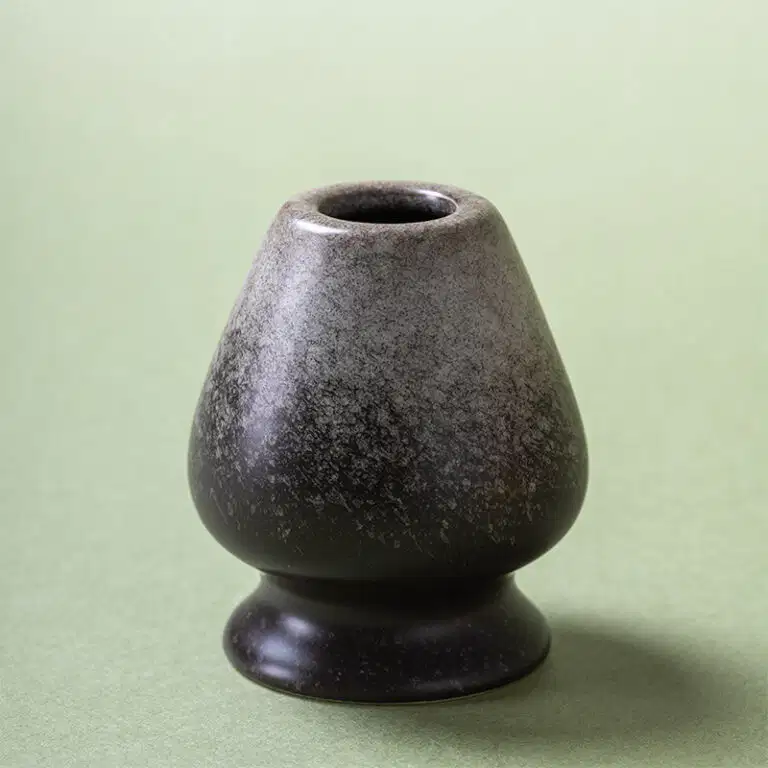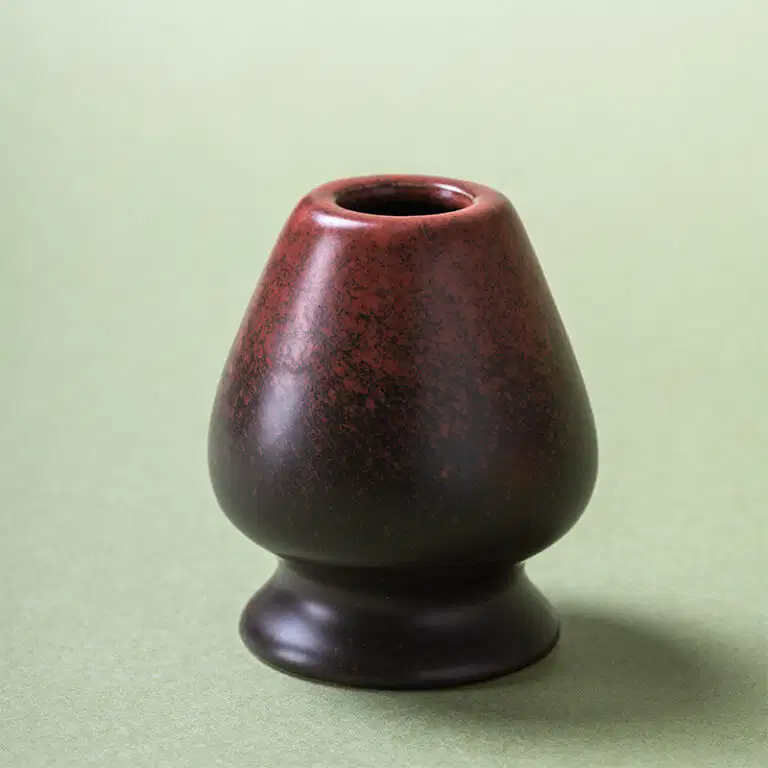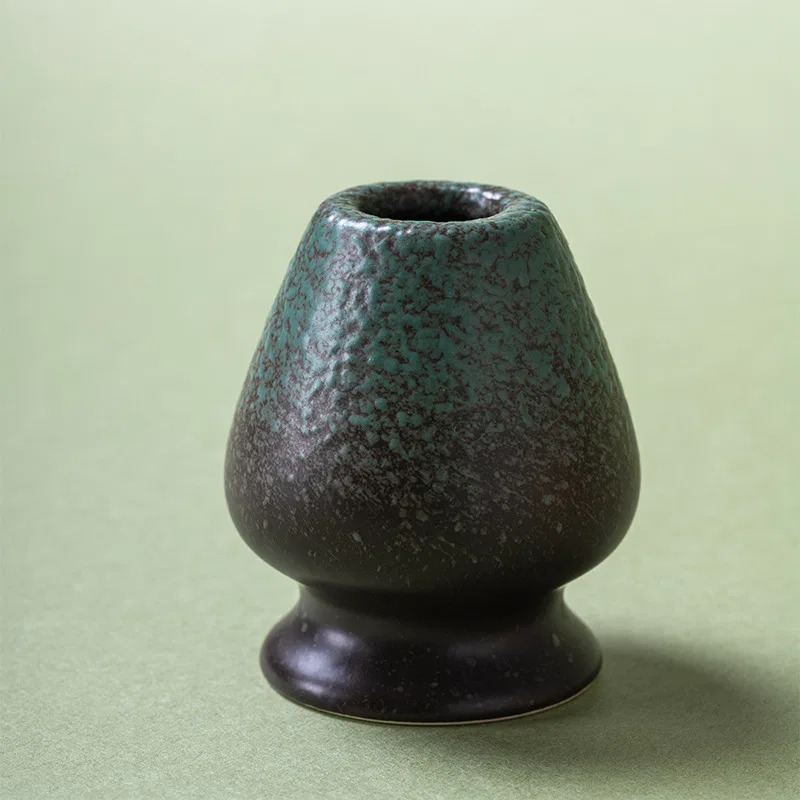
Ceramic Chasen Holder — Forest Green Glaze
Of all the colours that appear in the history of Japanese and East Asian ceramics, few are as quietly dramatic as the green that emerges from copper oxide in a high-fire reduction kiln. Appearing on pieces from Song Dynasty celadon ware to the celebrated Oribe style of the Momoyama period, this copper-green sits somewhere between moss, patinated bronze, and the first growth of spring — earthy, mineral, and alive with variation.
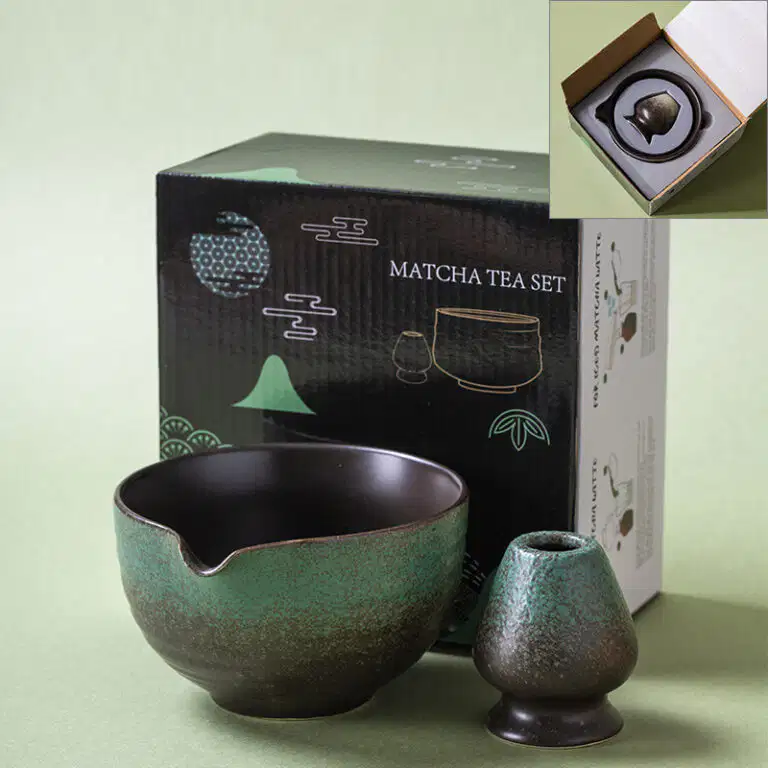
This chasen holder captures exactly that quality. The surface is heavily textured, almost volcanic with flecks and pools of teal-green breaking through a deep iron-black ground. In different lights it shifts: sometimes more green, sometimes more grey, always interesting. Like all pieces finished in this way, yours will be subtly unique to its firing.
What a chasen holder does:
A chasen tate, also called kuse-naoshi — is the tool that keeps your bamboo chasen (matcha whisk) in good condition between uses. After whisking a bowl of koicha or usucha, the tines of a chasen are damp and slightly splayed. Setting the whisk upside down on the holder’s raised dome allows the tines to dry in their correct position, preventing the warping and splaying that shortens a chasen’s life. For anyone using a quality whisk, particularly 80-tine, 100-tine, or fine hon-kazari grade whisks, a holder is a small investment that meaningfully extends the life of a more substantial one.
The glaze: copper, reduction, and the Oribe tradition:
The green colouring is produced by copper oxide in the glaze, fired in an atmosphere where oxygen is restricted inside the kiln (reduction firing). This process, central to the Japanese Oribe ceramic tradition originating in the late 16th century, yields unpredictable and unrepeatable results, which is precisely what makes these surfaces so valued within the wabi-sabi aesthetic. The rough, speckled texture also echoes the intentional irregularity of Shigaraki and Iga ware, where the marks of fire and ash on clay are considered part of the work’s beauty.
Styling your matcha station:
The forest green glaze is the most visually connected to matcha itself, the colour echo between the bowl’s contents and the holder creates a coherent, organic palette. It pairs naturally with unglazed or dark clay chawan, bamboo tea trays (obon), linen chakin, and wooden or bamboo chashaku. For a more layered aesthetic, it works equally well alongside celadon or off-white glazed bowls where the contrast in texture is the point.
Compatibility and care:
Fits all standard chasen sizes including 80-tine, 100-tine, and 120-tine whisks. The open footed base allows full airflow around and beneath the tines as they dry.
Hand wash only. Not dishwasher safe. The glaze is food-safe and lead-free. Surface texture variation, minor crazing, and colour shifts between pieces are inherent to this high-fire reduction process and are not faults.
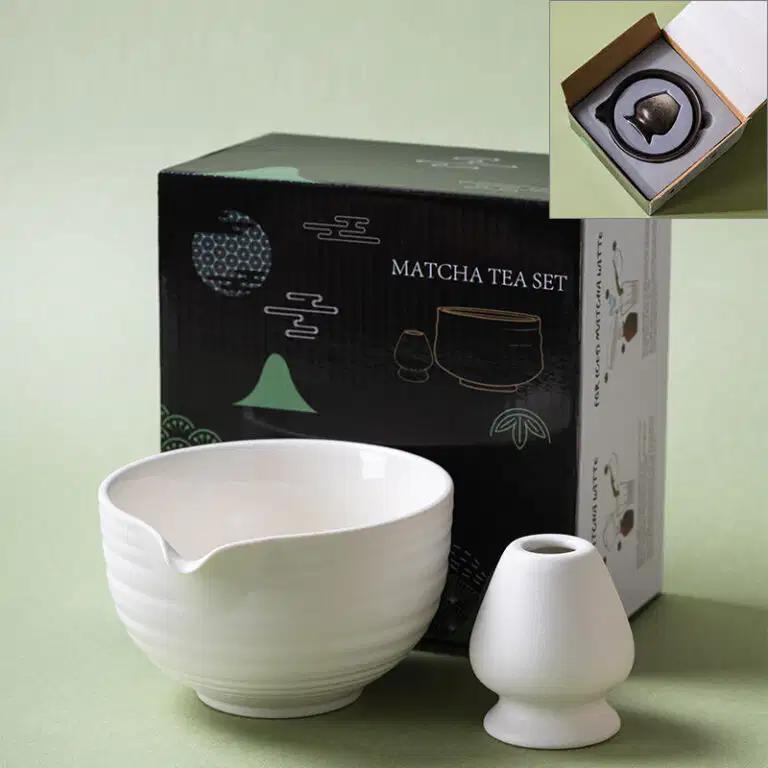
Sold separately from matcha bowls. Browse our full matcha tools collection, chasen, chashaku, natsume (tea caddies), and chawan in complementary glazes — to complete your setup.