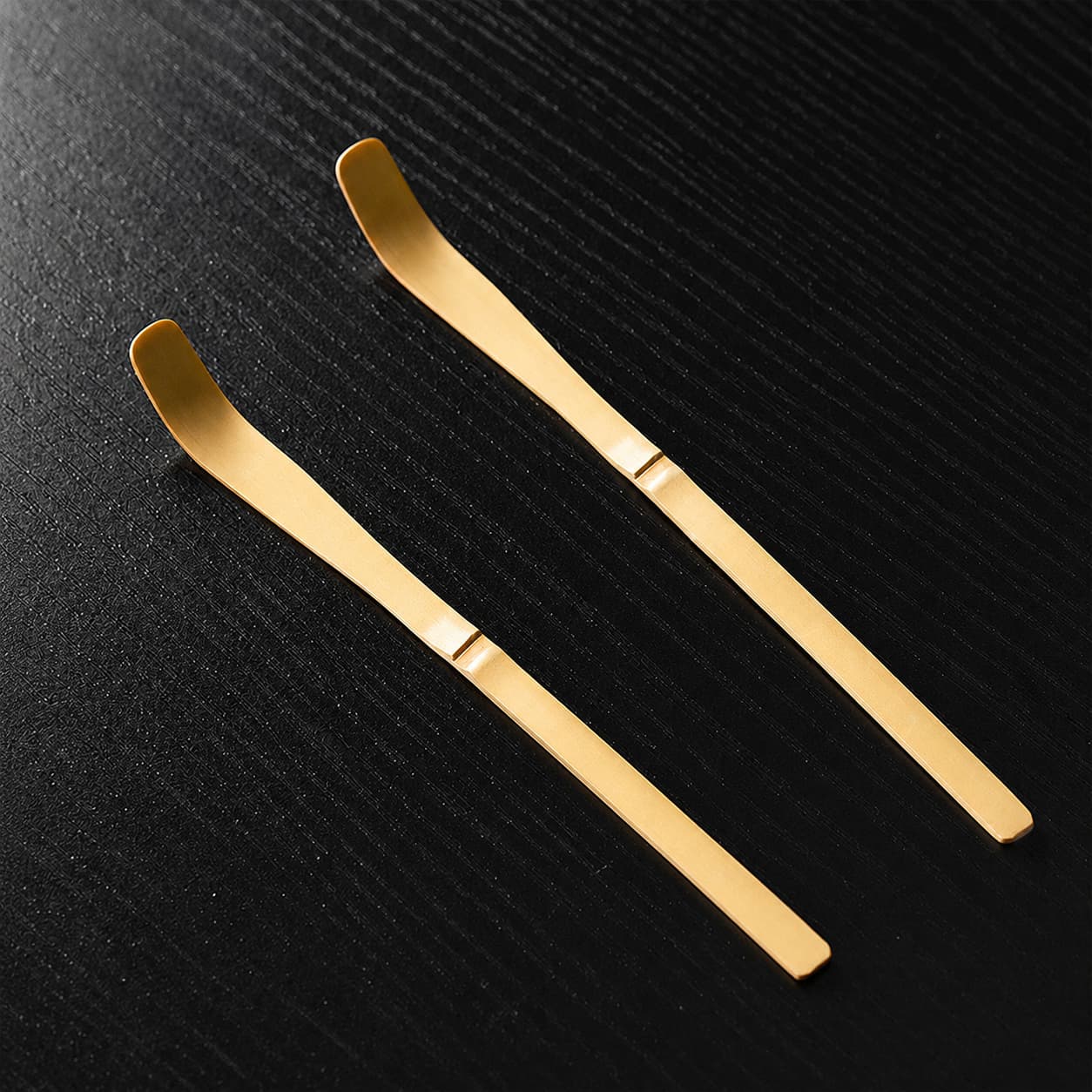
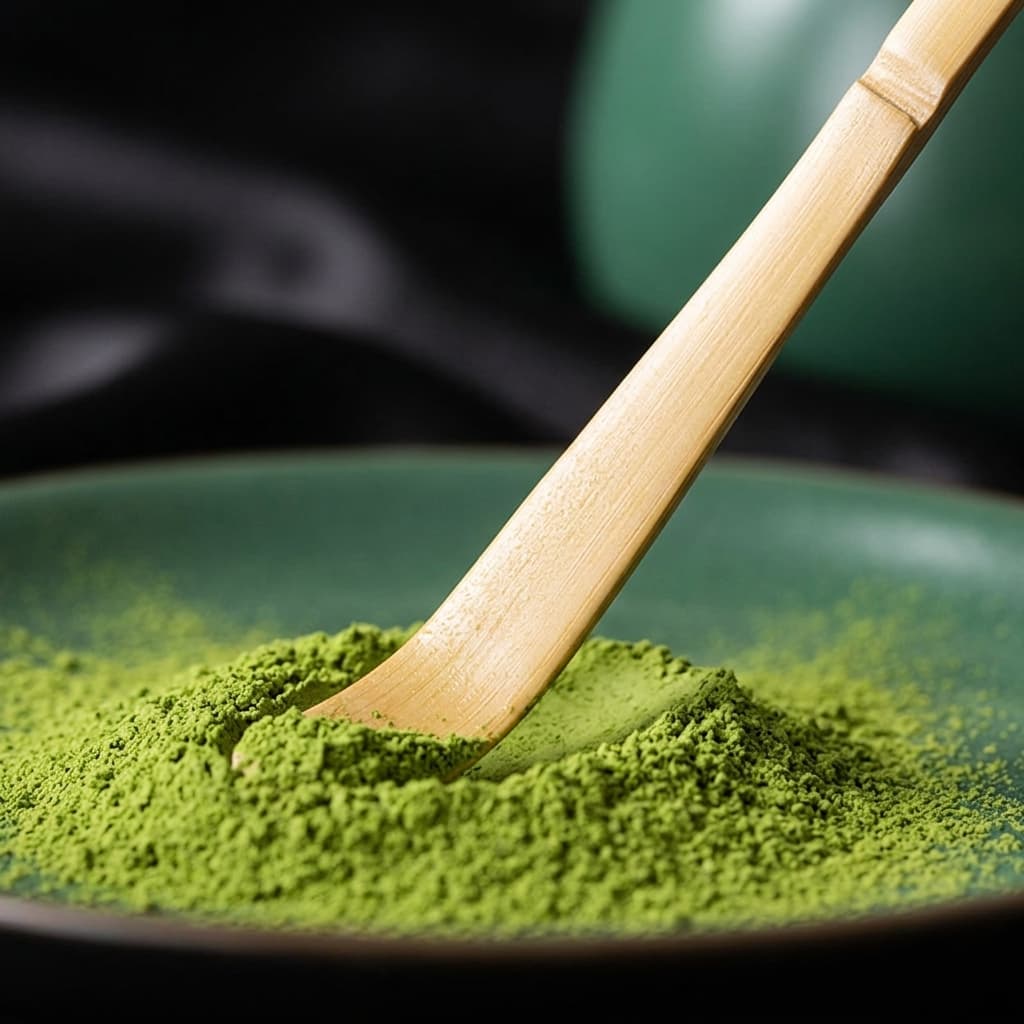
Of all the tools in the matcha practice, the chashaku is perhaps the most deceptively simple. A single piece of bamboo, perhaps 18cm long, carved to a thin, flat profile with a gently curved tip at one end, it looks, at first, like little more than a stick. But within the context of chado (the Japanese way of tea), the chashaku carries considerable significance. It is the measuring instrument that determines the strength and character of every bowl of tea prepared. It is the tool that the tea master holds between the fingers of one hand while the other steadies the natsume (tea caddy). And in the history of Japanese tea ceremony, it is the tool that tea masters carved themselves and gave as personal gifts — each chashaku an expression of the maker’s hand, character, and aesthetic sensibility.
This chashaku is made from a single piece of natural bamboo, finished to a smooth, warm golden tone that deepens slightly with handling over time. The shaft is long and flat, narrowing toward the scoop end, where the bamboo is curved upward into the characteristic tip, the sui, or spoon head, that cradles the matcha powder before releasing it cleanly into the chawan with a single, deliberate turn of the wrist.
Measure and precision:
One level chashaku scoop holds approximately 1g of matcha, the conventional measure for a bowl of usucha (thin matcha). For a stronger bowl, two scoops are used; for koicha (thick matcha), the measure increases further and is judged by eye and experience as much as by the scoop itself. The chashaku is not a precise scientific instrument, it is a calibrated one, its measure refined through the same tradition of practice that defines all of chado. Using it consistently builds an intuitive sense of proportion that a measuring spoon never quite achieves.
The bamboo and its history:
The use of bamboo for the chashaku is not incidental. Bamboo is light, odourless, and non-reactive, it transfers nothing to the matcha and picks up no flavour from repeated use. Its natural flexibility means the tip can curve without cracking, and its fine grain polishes to a surface smooth enough not to scratch the inside of a natsume or catch on the rim of a chawan. The tradition of carving chashaku from bamboo is documented to at least the 15th century in Japan, and the craft remains closely associated with the tea schools of Kyoto, particularly the Urasenke and Omotesenke lineages, where the chashaku is considered one of the most personal of the tea tools.
Sen no Rikyu, the founding figure of the wabi-cha aesthetic, is said to have carved his own chashaku and presented them to guests as expressions of the tea gathering’s spirit. While this chashaku is a contemporary piece rather than a carved gift from a tea master, it shares the same material logic: natural bamboo, a single piece, shaped to do one thing well.
Using your chashaku:
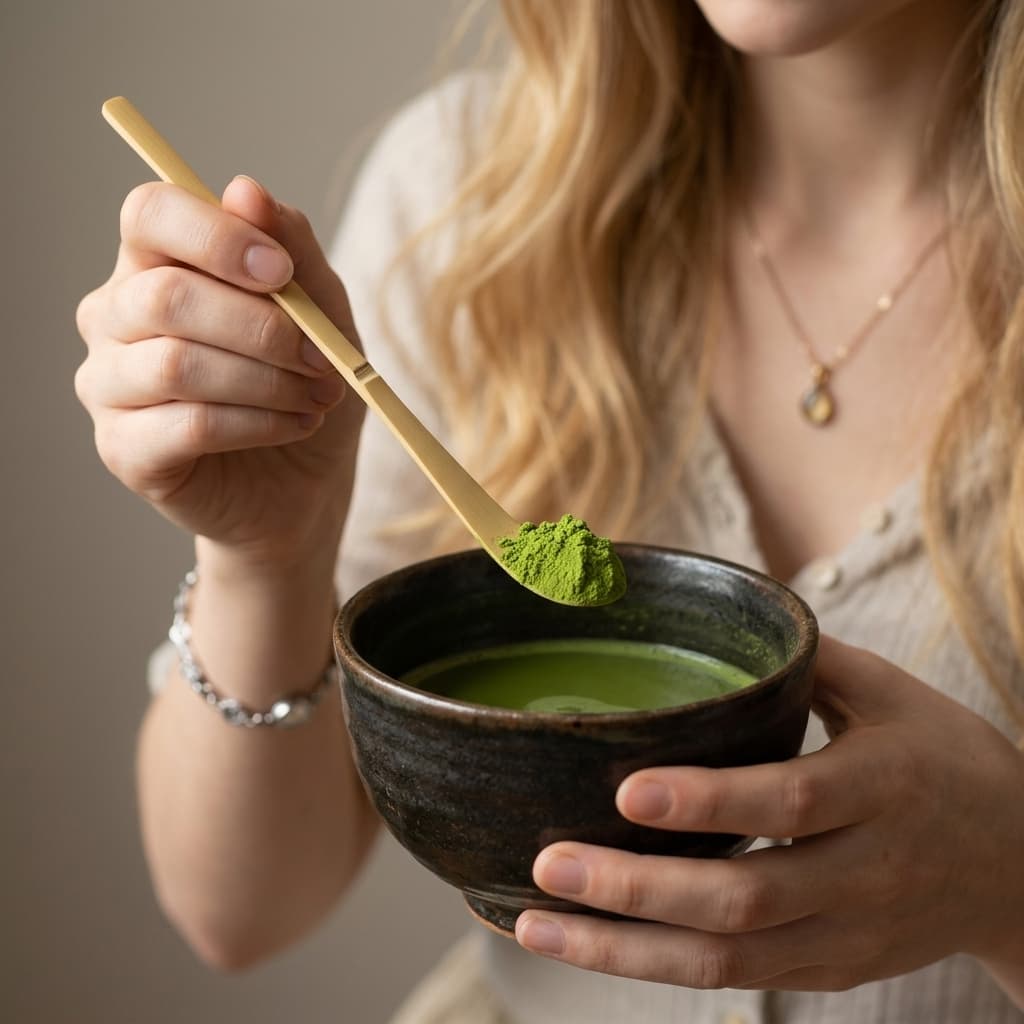
Hold the chashaku between the index and middle fingers of your dominant hand, with the tip facing downward toward the chawan. Dip the tip into the natsume or tea caddy and draw out a level scoop of ceremonial-grade matcha. Tap the shaft gently against the rim of the caddy to release any excess, then turn the scoop over the warmed chawan and allow the matcha to fall cleanly. For two scoops, repeat the motion. After use, wipe the tip clean with a dry chakin (tea cloth) or a clean dry cloth, do not rinse with water, which can cause the bamboo to swell or crack over time.
Completing your matcha setup:
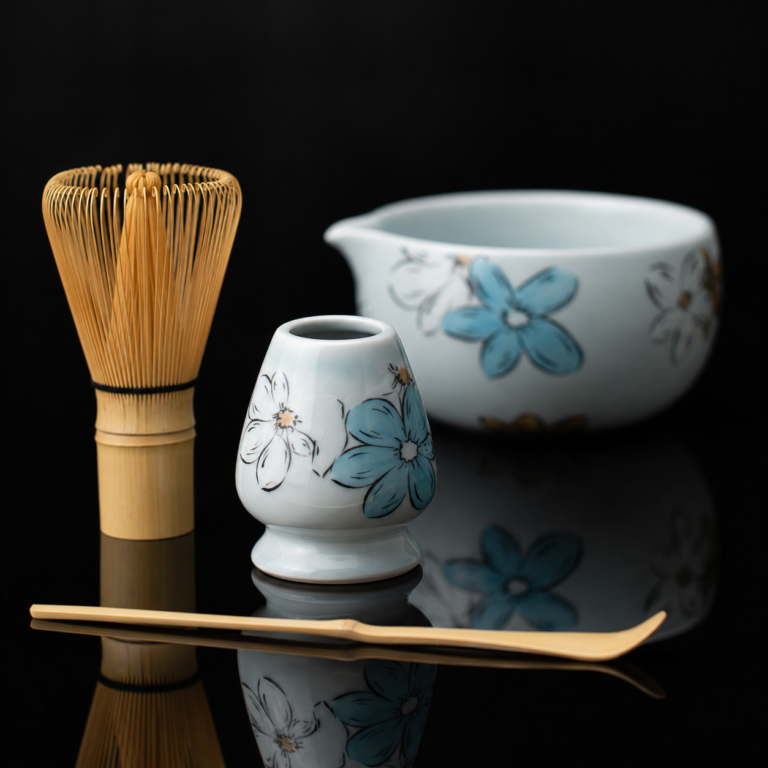
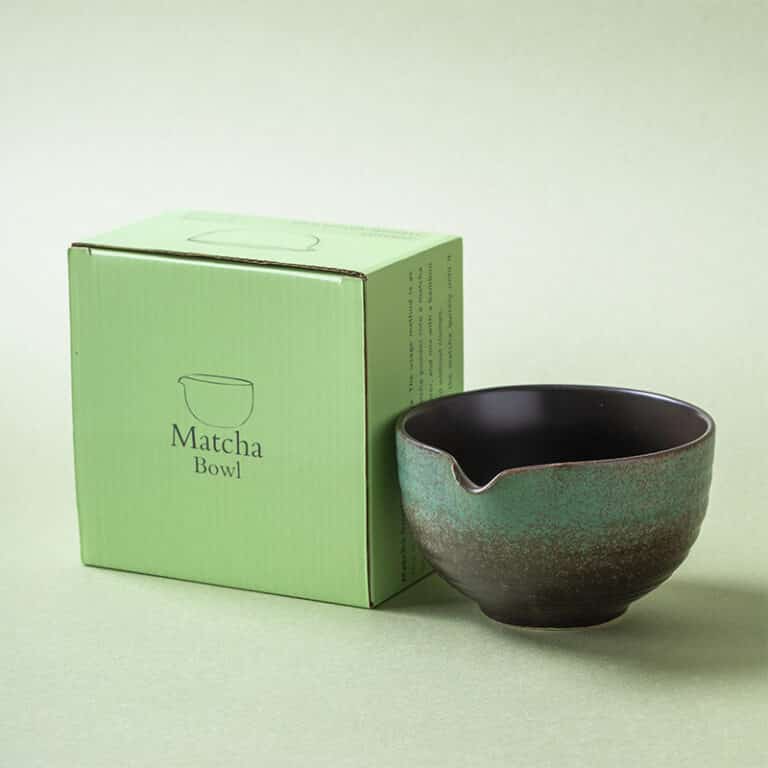
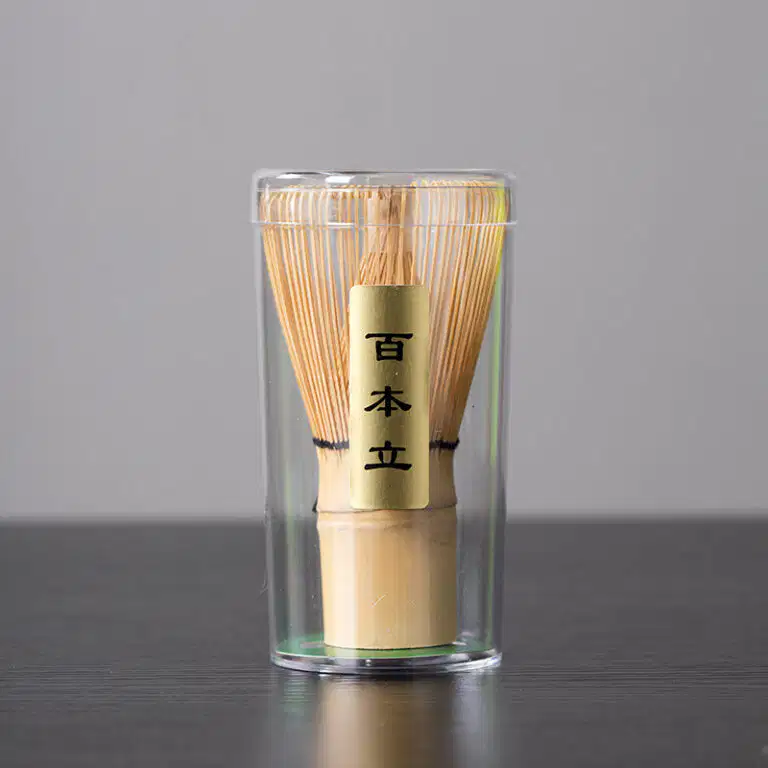
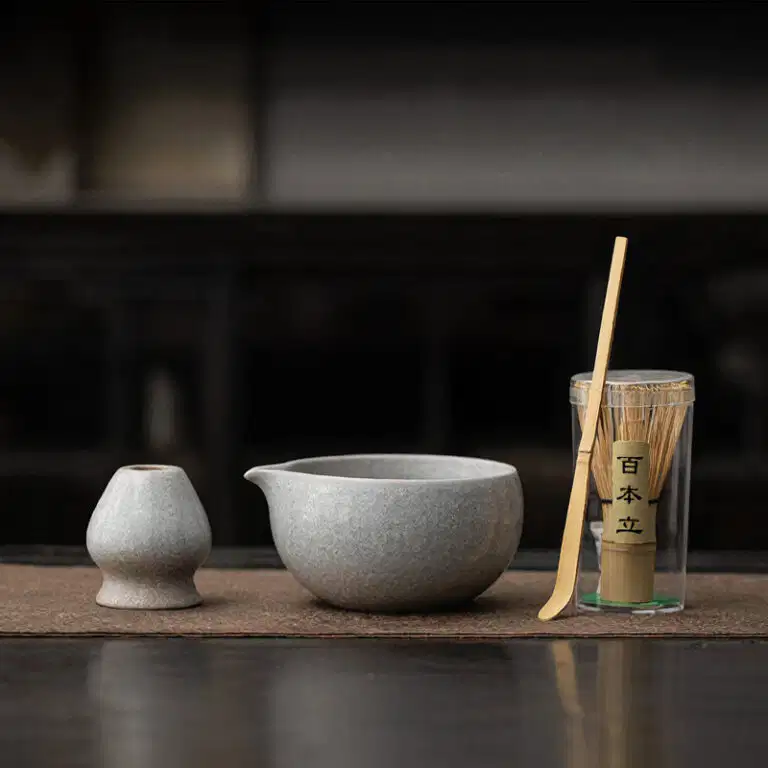
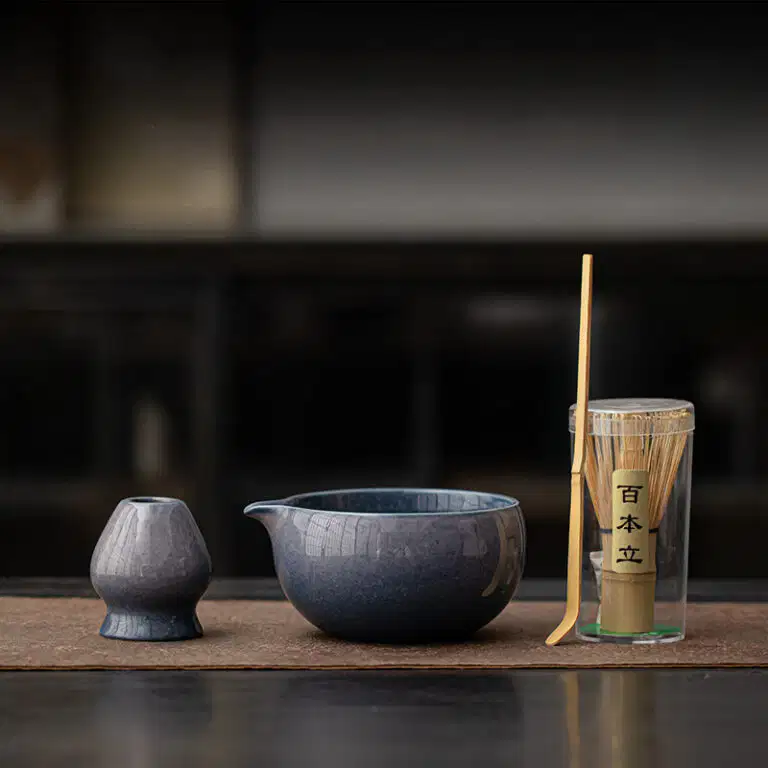
The chashaku is the final piece of a complete matcha tool set. Paired with a chawan (matcha bowl), a chasen (bamboo whisk), and a chasen tate (whisk holder), it gives you everything needed for a full, traditional preparation, from measuring the powder through to the finished bowl. All four tools are available individually in our collection, or can be chosen together to build a complete and cohesive matcha practice.