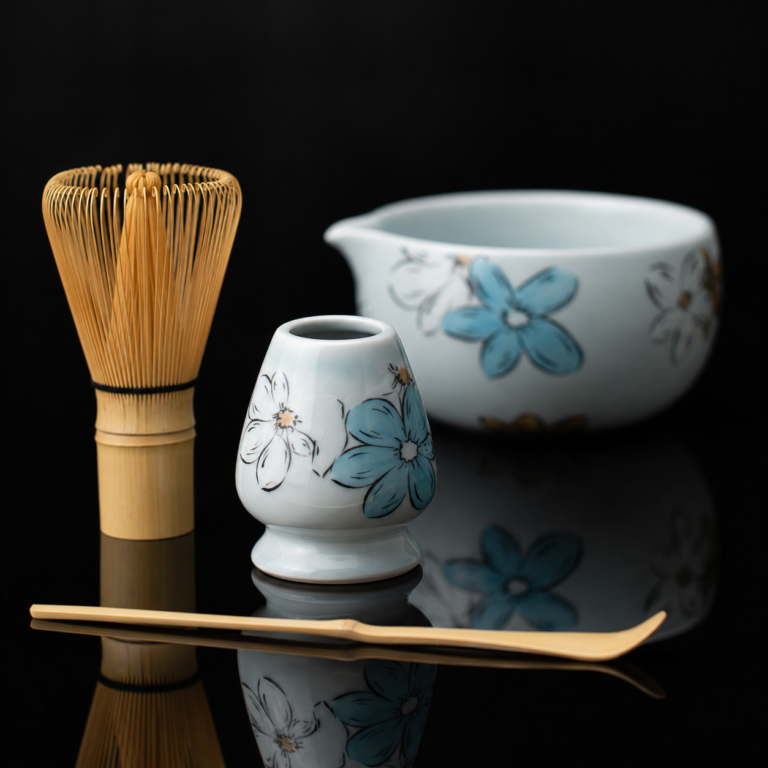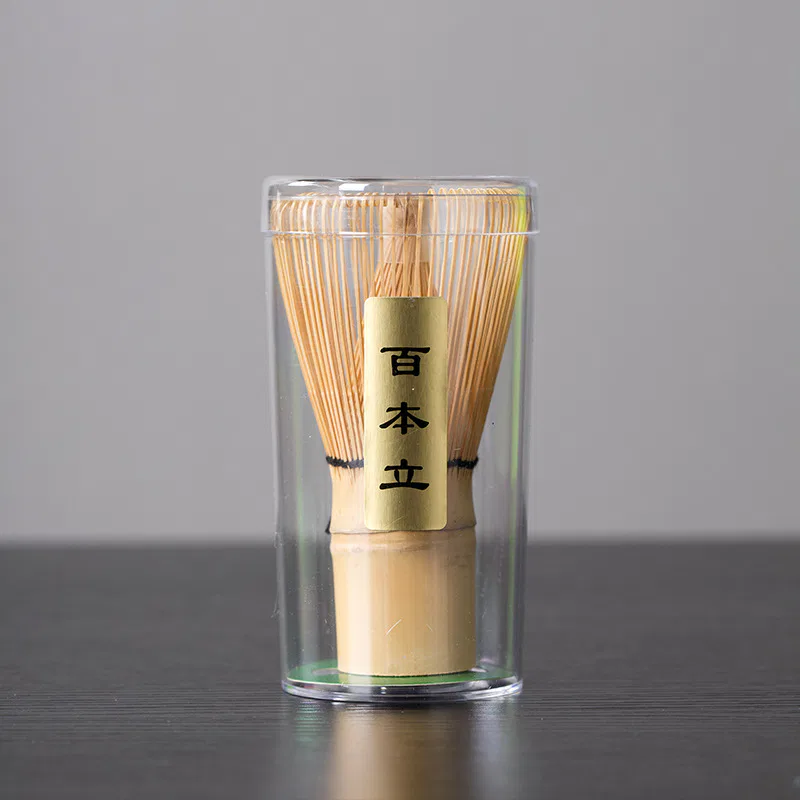
The chasen is the most technically demanding object in the matcha tool set to make, and the one whose quality has the most direct effect on the tea in the bowl. A good whisk does three things: it breaks up any clumps in the matcha powder, disperses it evenly through the water, and builds the fine, stable foam (awa) that sits on the surface of a well-prepared bowl. The number of tines (the individual bamboo prongs) determines how finely and thoroughly each of these happens. This chasen has 100.
The Japanese label reads hyakuhon-date, literally meaning “one hundred tine standing.” It is the standard grade for serious everyday matcha preparation and for formal use in chado (the Japanese way of tea). At 100 tines, the whisk has enough contact points with the liquid to blend the matcha smoothly without aggressive whisking, and to raise a finer, more even awa than an 80-tine whisk can achieve. For anyone preparing usucha (thin matcha) daily, it is the grade most often recommended by both the Urasenke and Omotesenke tea schools.
How a chasen is made:
Each chasen is made from a single piece of bamboo, specifically shiro-take (white bamboo), selected for its flexibility, fine grain, and resistance to splitting under repeated use in hot water. The base of the bamboo forms the handle; the upper section is split by hand into the tines, which are then individually shaped, thinned, and curved outward into the characteristic crown shape. The inner tines are shorter and stiffer; the outer tines are longer and more flexible. This two-layer structure, in higher-grade whisks called kazuho construction, allows the inner tines to work the bowl and the outer tines to lift and fold the foam. The whole process, from split bamboo to finished whisk, is done by hand in a craft tradition that has been centred in Takayama, Nara Prefecture, for over 500 years.
Tine count and what it means:
A 60-tine chasen is a basic whisk, adequate for rough mixing but limited in the fineness of foam it produces. An 80-tine chasen covers most everyday preparation well. A 100-tine chasen, this one, produces a noticeably smoother blend and finer awa with less effort, because each tine is finer and there are more contact points per stroke. Above 100, you reach the hon-kazari and kazuho grades (120 tines and above), which are the finest available and most often used in formal tea ceremony settings. For daily use, 100 tines represents the best balance of performance, durability, and value.
Using your chasen:
Before first use, soak the tines in warm water for 30–60 seconds to soften and flex them, this prevents early splitting and conditions the bamboo. Prepare your matcha in a pre-warmed chawan: sift 1–2 chashaku scoops of ceremonial-grade matcha into the bowl, add 70–80ml of water at 75–80°C, and whisk in a brisk W or M motion until a smooth, even layer of awa forms across the surface. After use, rinse the tines thoroughly under clean water while still warm, never use soap, which strips the natural bamboo oils. Shake gently and rest the whisk on a chasen holder (chasen tate) to dry with the tines lifted and open.
Storage and care:
This chasen arrives in a clear cylindrical storage tube, a practical detail that protects the delicate tines during transit and storage, and makes it straightforward to travel with the whisk or give it as part of a matcha gift set. For long-term storage between uses, a chasen holder is strongly recommended over the tube, which restricts airflow and can cause the tines to retain moisture.
A well-maintained 100-tine chasen used daily will typically last 2–3 months before the tines begin to show wear. Using a chasen holder and rinsing promptly after each bowl are the two most effective ways to extend its life.
Pairing:
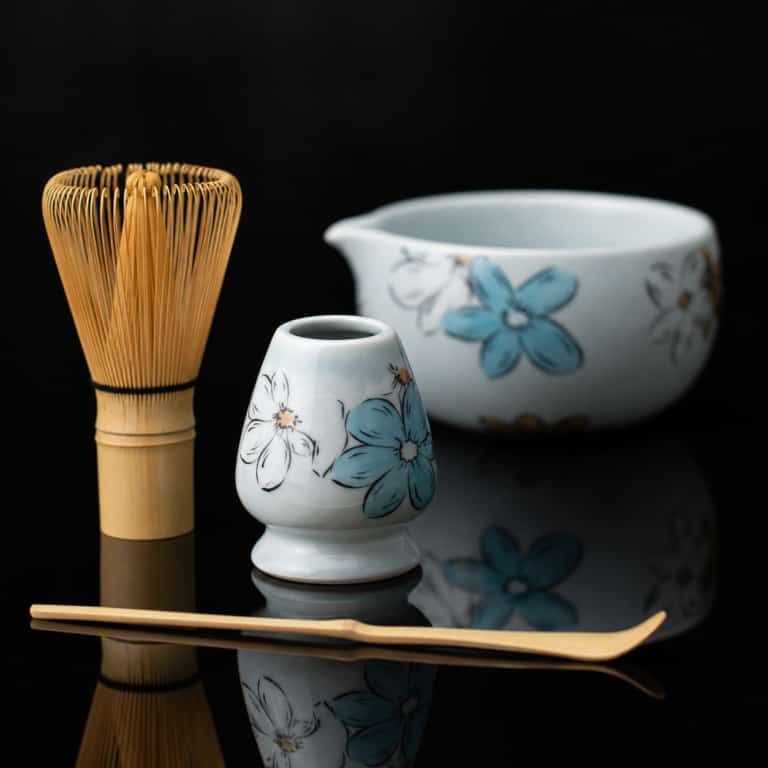
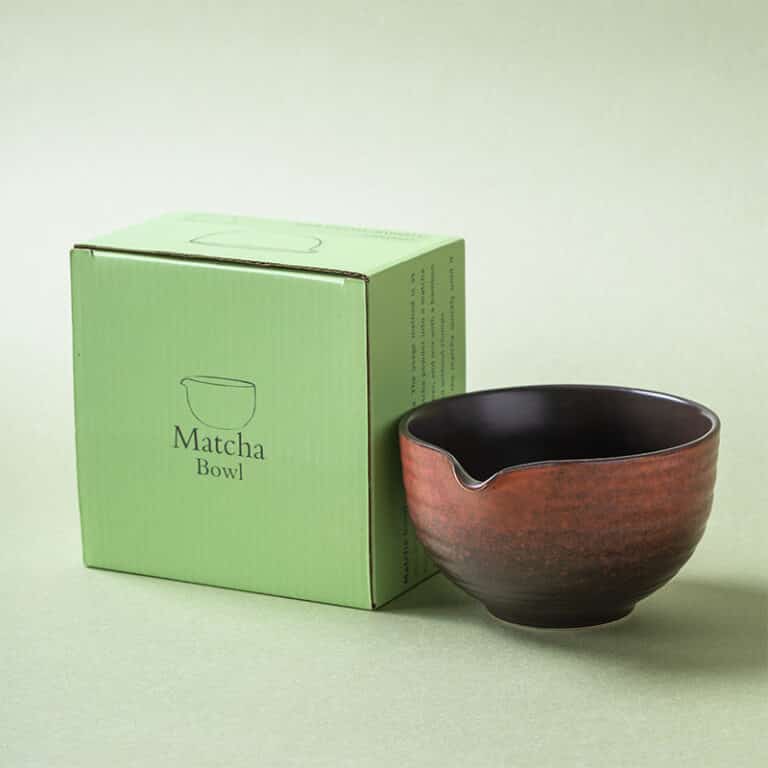
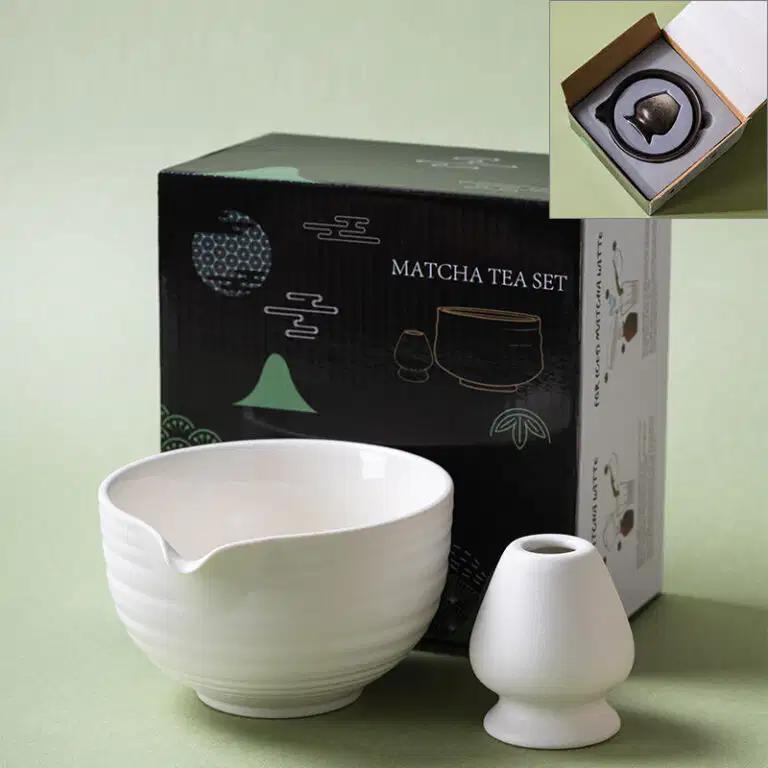
This chasen is compatible with all chasen holders (chasen tate) in our collection, including the Kebo, Rust Red, Forest Green, Matte Black, and Matte White glazes. It also pairs naturally with any of our chawan and with a chashaku (bamboo scoop) for a complete, traditional matcha setup.