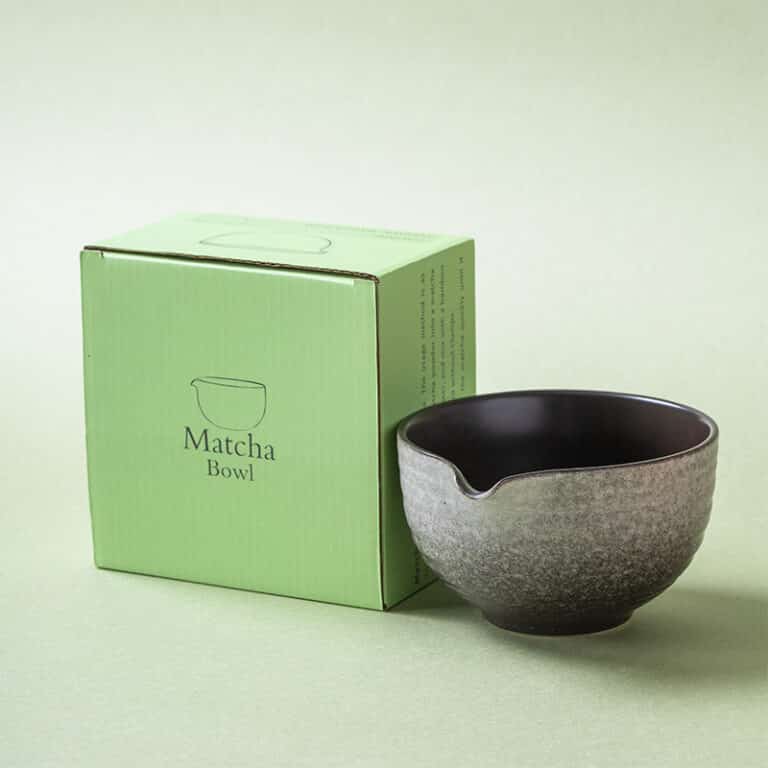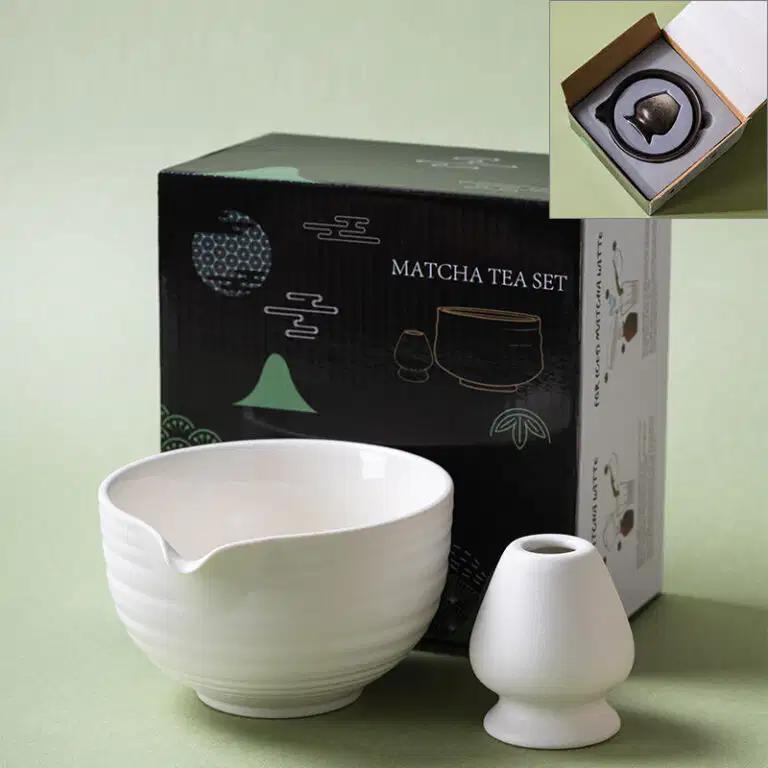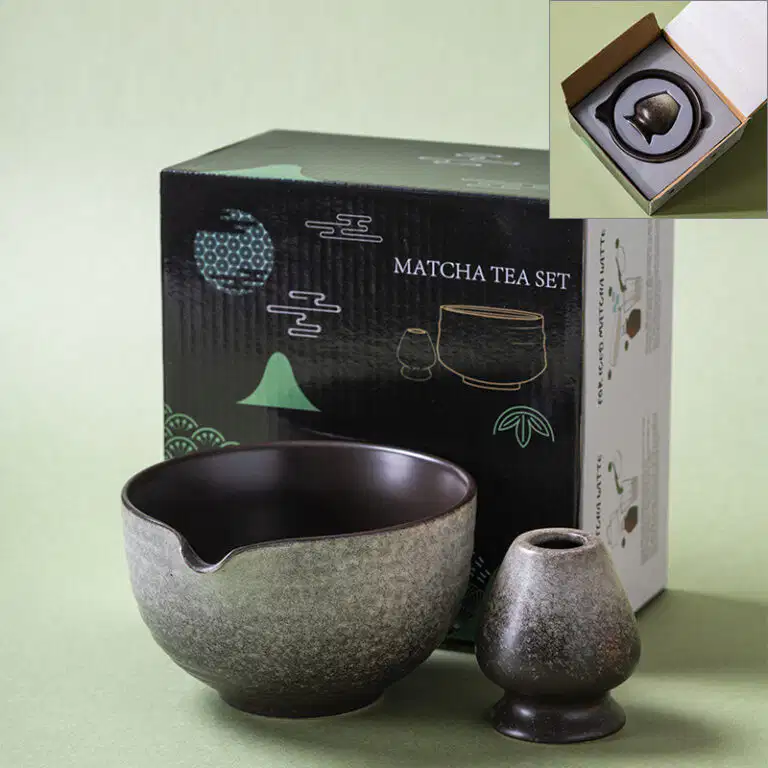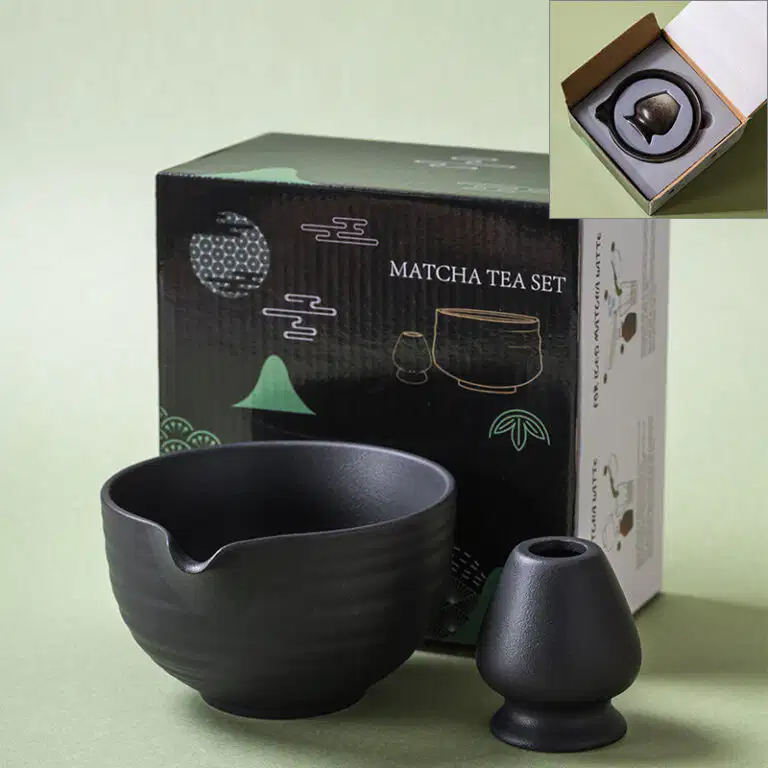
Iron has coloured ceramics for as long as ceramics have existed, and the red it produces under oxidising kiln conditions is among the most historically significant colours in the entire story of East Asian craft. The kaki glaze, named for the persimmon fruit whose colour it recalls, a deep orange-red that moves toward brown and black at its edges, appears on some of the most prized pieces in Japanese ceramic history: the iron-glazed wares of Bizen, Tokoname, and Shigaraki, and the temmoku bowls of Song Dynasty China whose warm, iron-rich surfaces were among the first foreign ceramics to be treasured in Japanese chado (the way of tea). This Rust Red set places itself within that lineage without pretension: two contemporary pieces in a glaze that understands where it comes from.
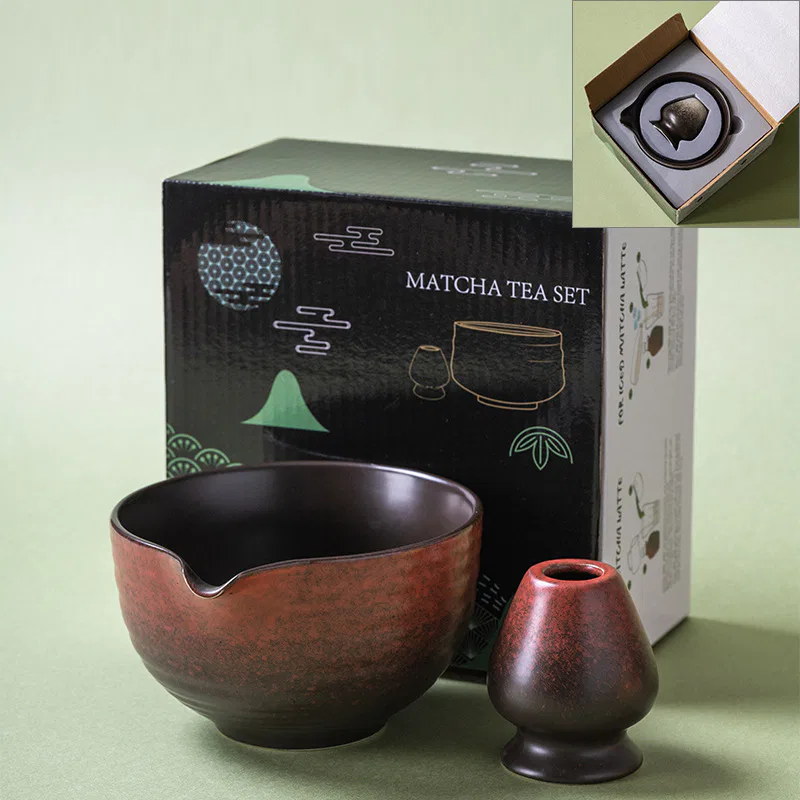
The colour on the bowl moves in a way that makes the pairing with the holder particularly interesting. The bowl carries the rust red most actively across its widest point and upper body, where the glaze is thinnest and the iron most exposed to the kiln atmosphere, fading toward a deeper near-black at the rim and at the foot. The holder, being a smaller and more vertical form, concentrates the glaze differently: a denser, more uniform dark red-brown that reads as a tonal companion to the bowl rather than a direct match. Side by side in the gift box, they read as a family rather than a pair of identical pieces, which gives the set a natural, considered quality that a perfectly uniform set can sometimes lack.
What is included:
Chawan (matcha bowl): A wide-mouthed stoneware matcha bowl in the rust red kaki glaze, with a smooth matte-black interior that provides strong contrast to the vivid green of ceremonial-grade matcha. The dark interior also makes the awa (foam) of a well-whisked usucha easy to read and judge. A small pouring spout is cut into the rim for clean serving and sharing. The kodai (foot ring) is hand-finished with the natural slight irregularity of a handmade piece. In the Japanese ceramic tradition, the warm iron tones of a kaki-glazed chawan have long been considered particularly sympathetic to the colour and flavour of matcha — the earthiness of the glaze complementing the grassiness of the tea. For full glaze history and preparation guidance, see the individual Rust Red Chawan listing.
Chasen tate (whisk holder): A ceramic chasen holder in the matching rust red kaki glaze, more compact and vertical than the bowl, with the colour concentrated into a deeper, darker red-brown. The raised interior dome supports the tines of a bamboo chasen as they dry after each preparation, holding them in their correct curved position and significantly extending the working life of the whisk. For full detail, see the individual Rust Red Chasen Holder listing.
Who this set is for:
As a gift: the Rust Red pairing is the most characterful and the most historically grounded of the bowl-and-holder sets, and the one most likely to appeal to someone with a serious interest in Japanese ceramics or an existing matcha practice. The kaki glaze has centuries of cultural weight behind it, and the warm, earthy tones of the set make it a natural choice for autumn and winter gifting in particular. The premium gift box with foam insert means it arrives presentation-ready.
For your own setup: if you already have a 100-tine bamboo chasen and chashaku, this 2-piece set gives you the two ceramic pieces needed to complete a traditional matcha preparation. Both the chasen and chashaku are available separately in our collection.
Iron, fire, and the kaki tradition:
The rust red of this set comes from iron oxide in the glaze, fired at high temperature in an oxidising atmosphere where oxygen interacts with the iron to produce the characteristic kaki colour. This is the same basic chemistry that produced the iron-glazed ceramics prized by the Urasenke and Omotesenke schools of Japanese tea for centuries: warm, earthy, and understood within chado to complement the cool, grassy character of matcha in a way that cooler or paler glazes do not. The set is a contemporary expression of that understanding.
Care:
All ceramic pieces: hand wash only, not dishwasher or microwave safe. The iron-rich kaki glaze will develop a subtle patina with regular use, which is a natural characteristic of this glaze type rather than a sign of wear. Bamboo pieces, if added separately: wipe clean with a dry cloth after each use, do not soak.