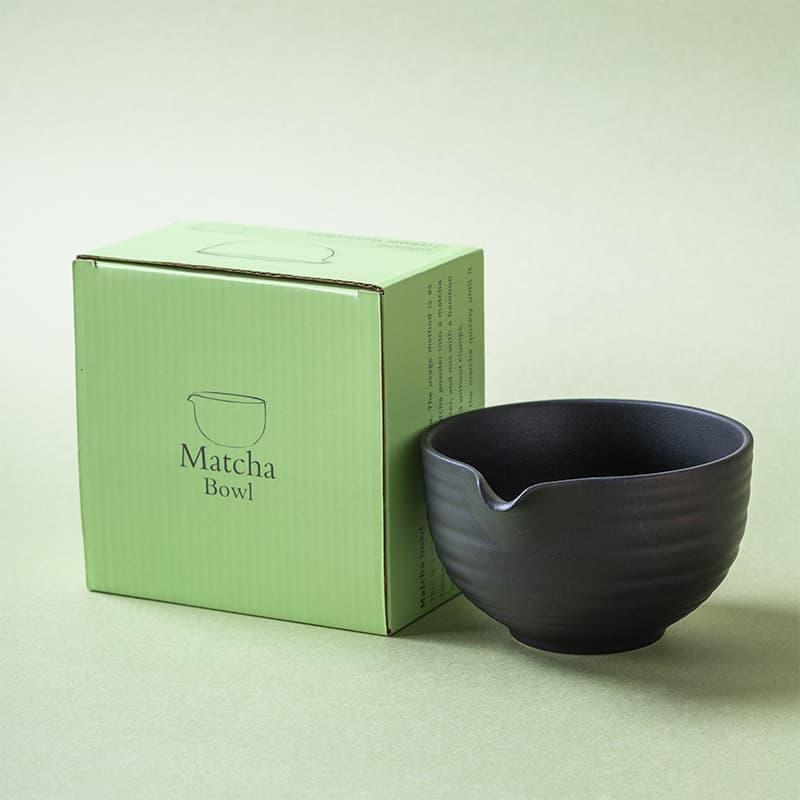
Look closely at the surface of this bowl and you will see the throwing lines, the fine, horizontal ridges left by the potter’s hands as the clay moved on the wheel. Most production ceramics remove these marks in finishing. Here they are kept: a quiet acknowledgement that this object was shaped by a person, at a wheel, from a lump of clay. In the Japanese ceramic tradition, particularly within the aesthetic of wabi-cha developed by Sen no Rikyu, this kind of visible making is not incidental, it is the point. The beauty of a handmade chawan lies partly in what it records.
The glaze is a deep, unreflective matte black, close in spirit to the iron-black temmoku glazes that Song Dynasty potters developed for tea bowls, and which became among the most prized objects in early Japanese chado when Zen monks carried examples back from China. Where temmoku tends toward a glassy surface, this finish is drier and more contemporary: the clay body visible beneath, the texture of the stoneware felt through the glaze rather than hidden by it. It absorbs light rather than reflecting it, which gives the bowl a settled, grounded quality in the hand.
A bowl that works with everything:
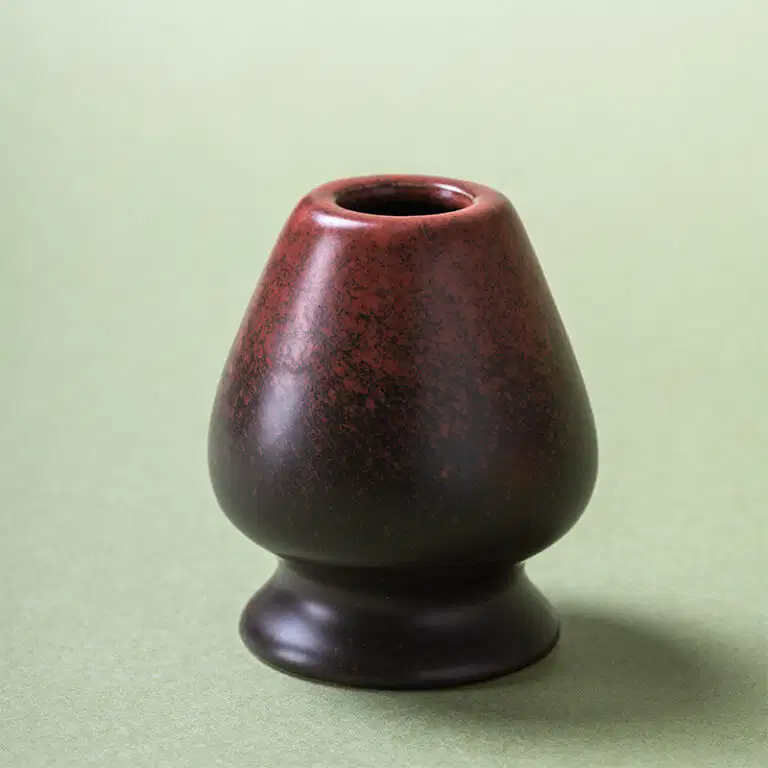
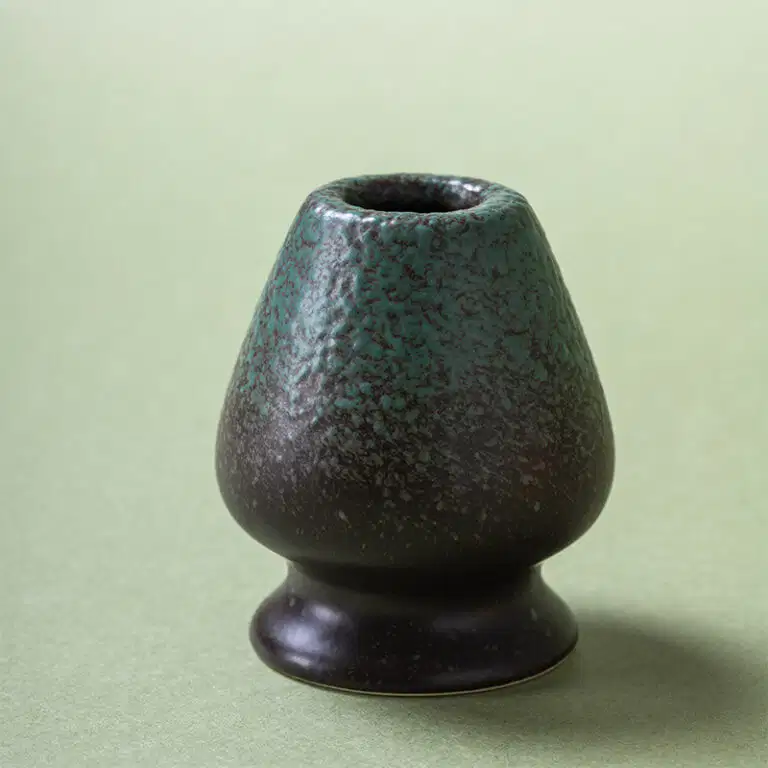
The matte black chawan is the most versatile in the collection. Its neutrality means it pairs naturally with every glaze in the range, the ashen tones of the Kebo holder, the copper-green of the Forest Green, the rust warmth of the iron-red, the clean contrast of the Matte White. It also works as a standalone piece for anyone building a matcha practice from a single, considered starting point: a bowl that will never feel out of place, whatever else changes around it.
Form and function:
The bowl is wide-mouthed and generously proportioned, giving the chasen room to move freely during whisking and allowing the awa (foam) to build evenly across the surface. The wall profile is suited to both usucha (thin matcha, briskly whisked to a fine foam) and koicha (thick matcha, blended slowly with less water). A small pouring spout is cut into the rim for clean serving. The kodai (foot ring) shows the natural marks of hand-finishing, slight irregularity that is a characteristic of wheel-thrown ware rather than a flaw, and a quality that collectors of Japanese ceramics consider expressive of the maker’s hand.
Using your chawan:
Begin by warming the bowl: pour a small amount of hot water in, swirl gently, and discard. This brings the stoneware to temperature and prevents thermal shock. Sift 1–2 chashaku scoops (approximately 1.5–2g) of ceremonial-grade matcha into the warmed bowl. Add 70–80ml of water at around 75–80°C, not boiling, which degrades the amino acids including L-theanine that give matcha its characteristic smooth, sustained energy. Whisk in a brisk W or M motion with your chasen until a fine, even foam covers the surface. Drink directly from the bowl, turning it in both hands before the first sip, a gesture that completes the preparation and acknowledges the care taken in it.
Pairing and gifting:
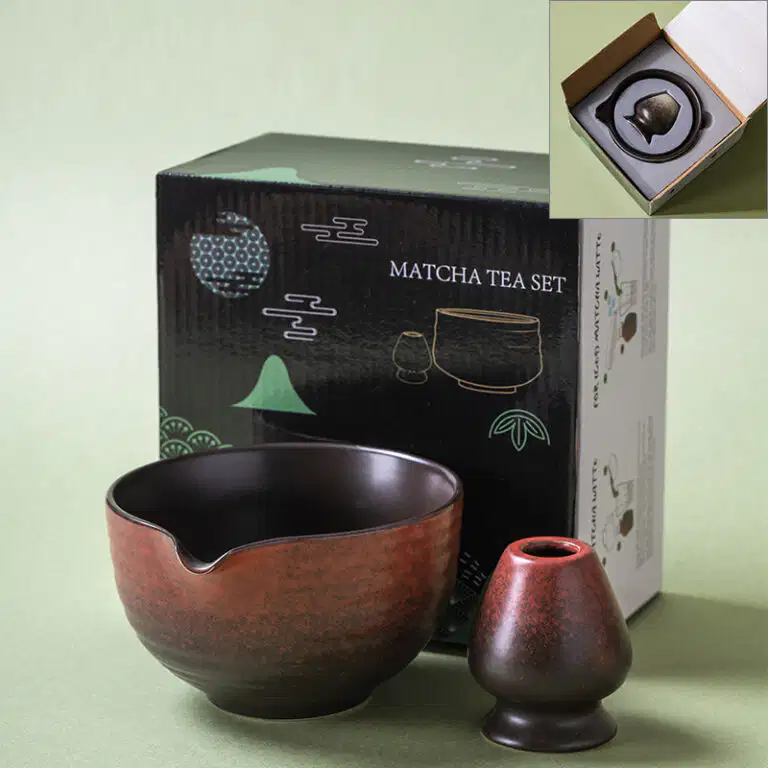
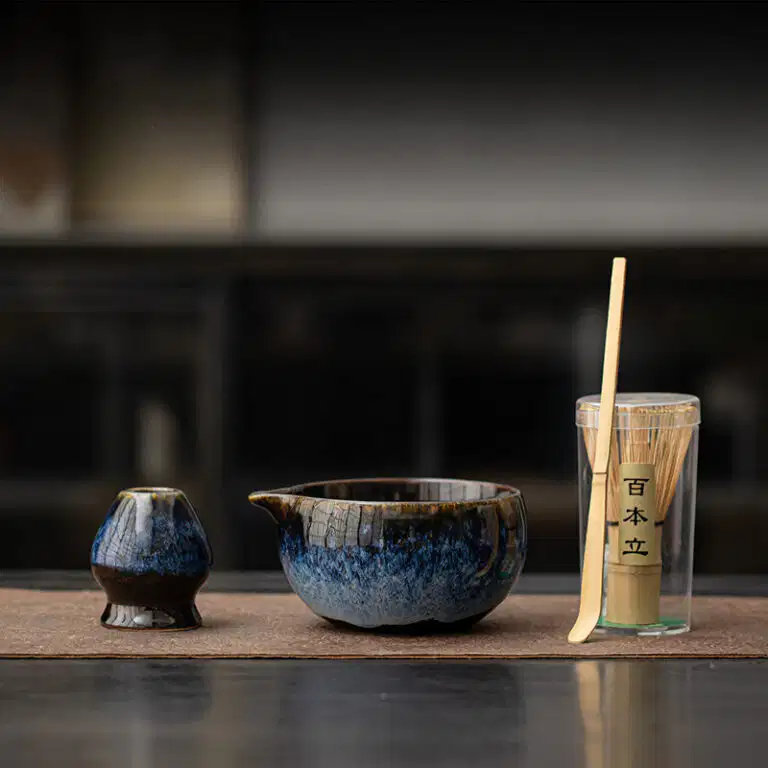
This chawan pairs directly with our Matte Black Chasen Holder, the same finish, the same considered simplicity, the same absence of decoration. Together they make the most minimal and most contemporary pairing in the collection: a complete matcha set for anyone drawn to the Japandi aesthetic or to objects that let the practice speak for itself. Both arrive in our signature matcha green gift boxes.
Care:
Hand wash only. Not dishwasher or microwave safe. The matte stoneware surface may develop a very slight sheen in areas of frequent contact over time, a natural patina of use. The bowl will season quietly with every preparation.