There is something immediately right about a green bowl for matcha. The tea itself, ground from shade-grown tencha leaves, vivid with chlorophyll, carrying the grassiness of the field where it was grown, belongs in a vessel that shares something of its origin. This is not a design decision so much as a recognition: that the most considered pairings in chado have always acknowledged the relationship between what is in the bowl and the bowl itself.
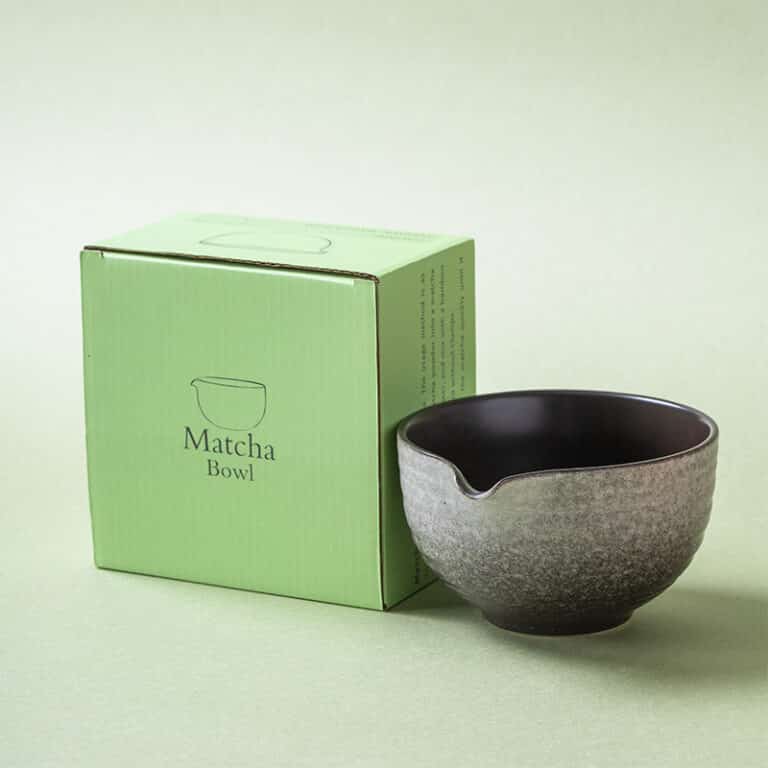
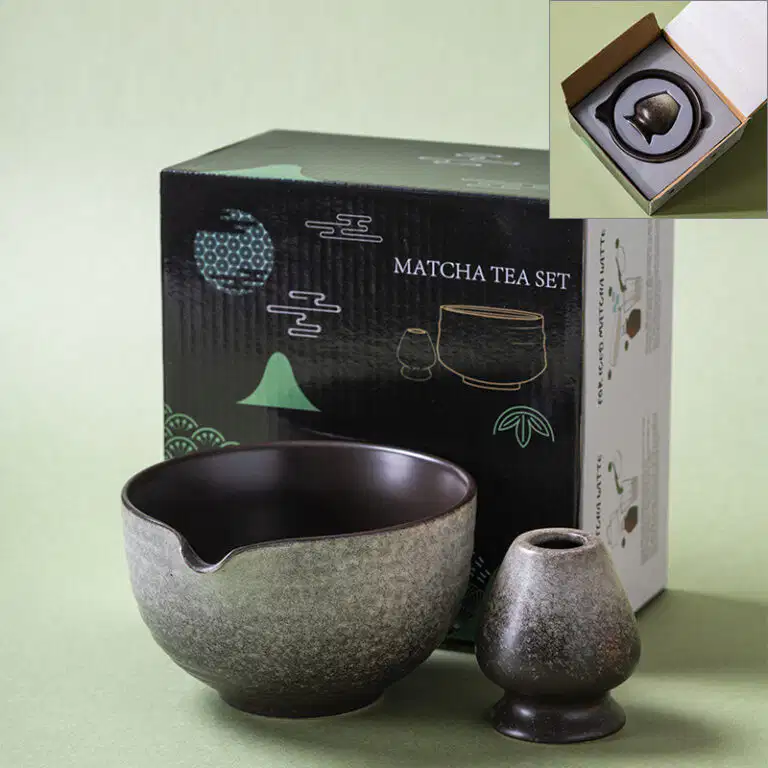
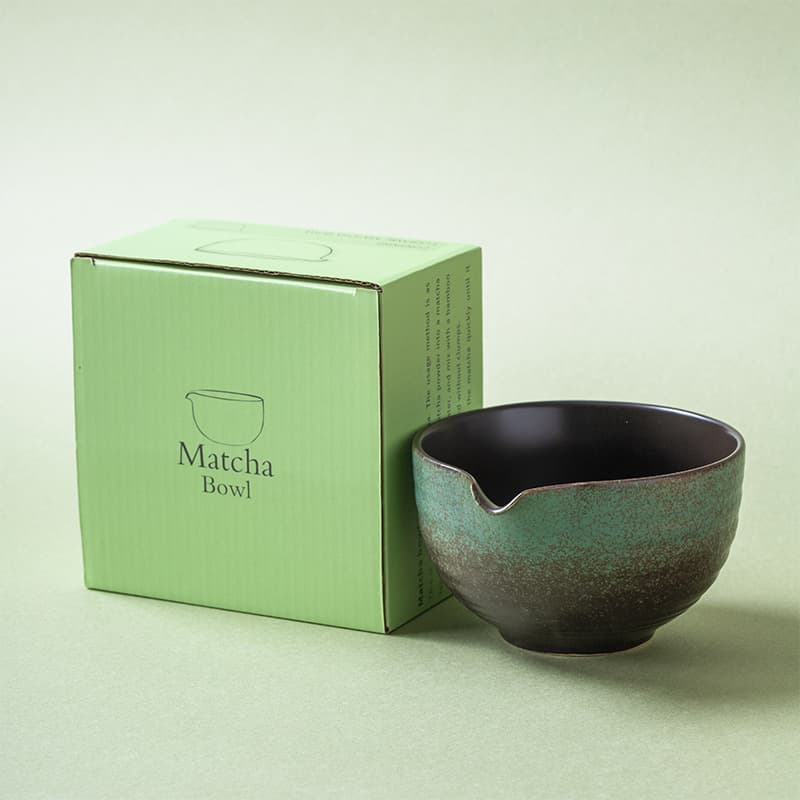
The forest green glaze on this chawan comes from copper oxide fired in a reduction atmosphere, the same process that defines the celebrated Oribe ceramic tradition, developed in Japan during the Momoyama period in the late 16th century under the influence of tea master Sen no Rikyu’s successors. At high kiln temperatures with restricted oxygen, copper oxide produces an unpredictable, layered green: sometimes turquoise, sometimes mossy, always complex. The exterior surface of this bowl is heavily speckled, almost volcanic, pools of teal breaking through an iron-dark ground, like lichen on wet stone. The interior is smooth and matte black, which keeps the focus on the matcha itself during preparation.
A bowl that mirrors its contents
The visual relationship between this chawan and the matcha prepared in it is unlike any other in the collection. The copper-green of the exterior and the vivid chartreuse-green of ceremonial-grade matcha are distinct enough to read separately, one earthy and complex, the other bright and fresh, while being connected by the same botanical origin. The bowl holds the tea; the glaze echoes it. For many people this makes the Forest Green the most personally meaningful of the collection to use daily.
Form and function
The bowl is wide-mouthed, giving the chasen full freedom of movement during whisking, important for building the even, fine foam (awa) that indicates a well-prepared bowl of usucha. The wall height and depth are also suited to koicha, where the motion is slower and more deliberate and the tea is thicker. A small pouring spout is cut into the rim for clean serving and sharing. The kodai (foot ring) is hand-finished, with natural irregularity, in the Japanese ceramic tradition, the foot is considered as telling as the glaze, and potters working in the wabi-sabi aesthetic intentionally preserve the marks of making.
Using your chawan
Warm the bowl first with a small pour of hot water, swirl, and discard, this brings the stoneware to temperature so the matcha stays warm longer and prevents thermal shock to the clay body. Sift 1–2 chashaku scoops (approximately 1.5–2g) of ceremonial-grade matcha into the warmed bowl. Add 70–80ml of water at 75–80°C below boiling, to protect the amino acids and avoid bitterness. Whisk in a brisk W or M motion with your chasen until a smooth, even layer of fine foam covers the surface. Drink from the bowl directly, turning it gently in both hands before the first sip.
Pairing and gifting
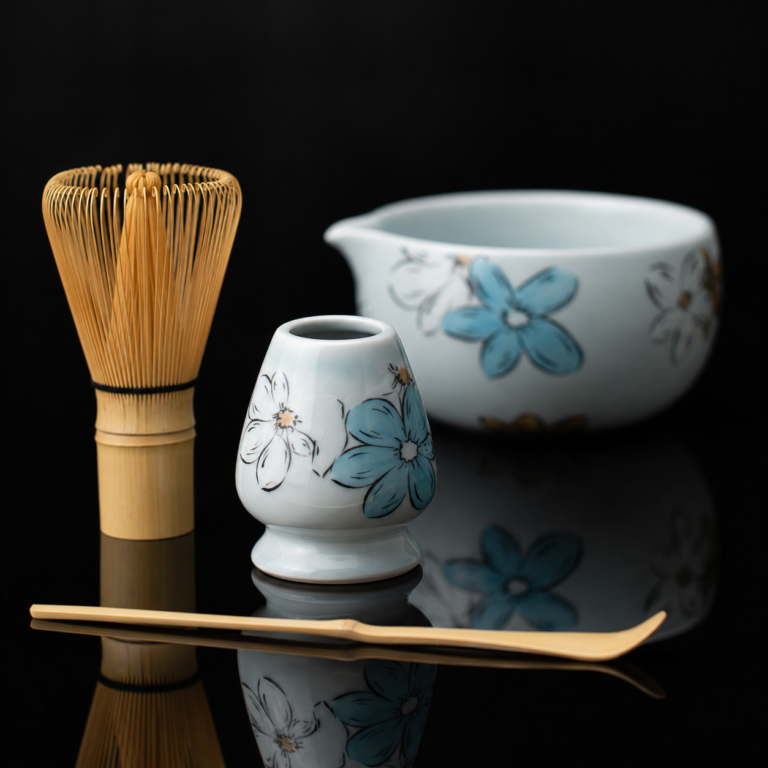
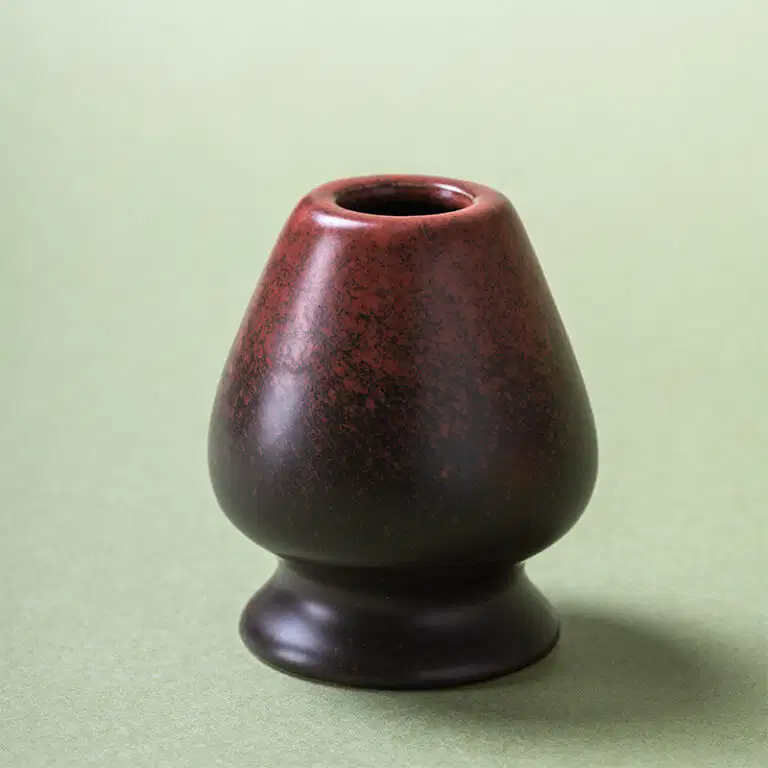
This chawan is designed to sit alongside our Forest Green Chasen Holder, the same glaze, the same copper-fired palette, the same textured surface character. Together they form the most visually coherent pair in the collection and make a considered gift for anyone who takes their matcha practice seriously.
Care
Hand wash only. Not dishwasher or microwave safe. The textured exterior glaze may accumulate slight residue in the deeper surface pitting over time; a soft brush and warm water will keep it clean. The matte interior will season naturally with use.