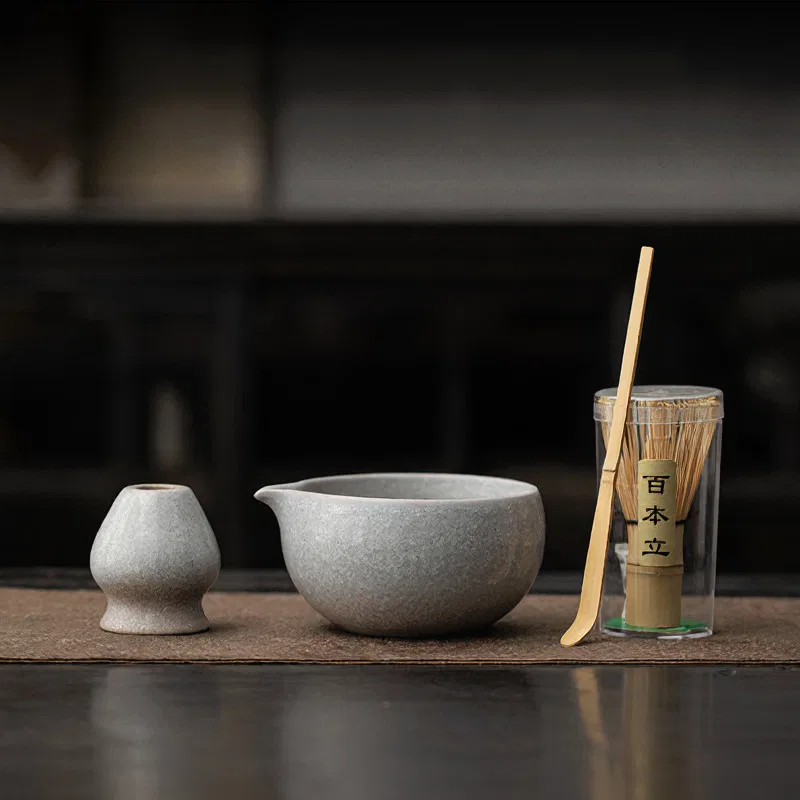
Kiln-Glazed Matcha Set, 4 Piece (Ash/Stone)
The most enduring aesthetic position in Japanese ceramics is not colour, not decoration, and not technical virtuosity. It is the quality that Sen no Rikyu identified at the heart of wabi-cha: the beauty of things that have nothing to hide. Clay fired honestly, without embellishment, that shows its own nature clearly. The Stone set is the fullest expression of that principle in this collection.
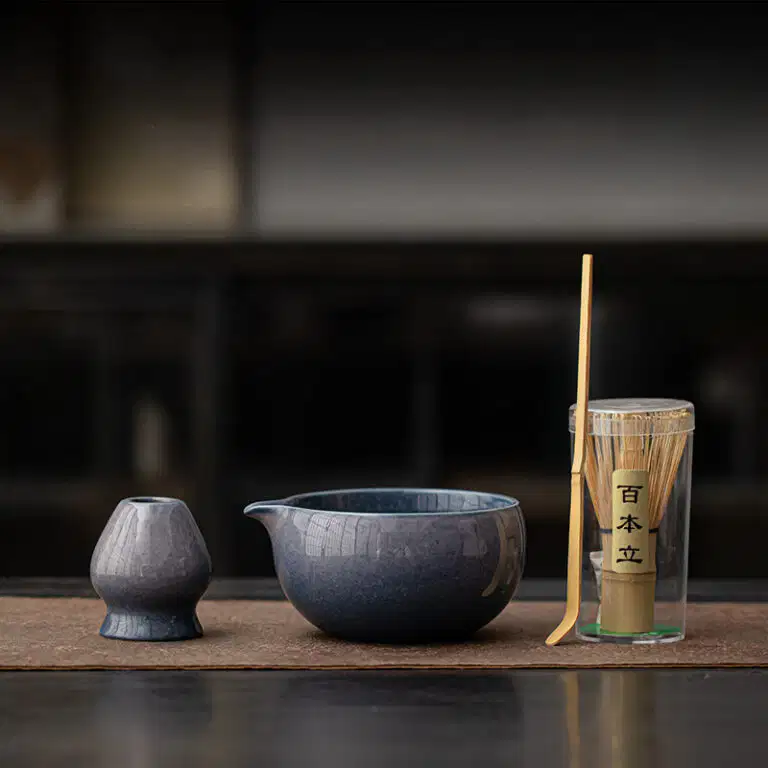
The glaze is a cool, even granite-grey with a fine salt-and-pepper speckle produced by the mineral composition of the clay body and glaze interacting at high kiln temperatures. The surface is matte and dry to the touch, absorbing light rather than reflecting it. There is no colour movement, no dramatic pooling, no zone of transition. What you see is consistent across the entire form, on the bowl and on the chasen holder alike, which means the eye settles on the shape itself rather than being led across the surface by colour. In this way the Stone set has more in common with the great unglazed or ash-glazed ceramics of Shigaraki, Bizen, and Iga ware than with the yohen pieces elsewhere in the collection: its beauty is structural rather than decorative, and it deepens with familiarity rather than announcing itself immediately.
The speckle pattern also connects this piece to a specific technique in Japanese ceramic history: shino ware (shino-yaki), developed in the Mino region during the Momoyama period, where potters applied thick, irregular white or grey glazes over iron-spotted clay to produce surfaces of quiet complexity. Shino was among the first ceramic styles developed specifically for use in chado (the way of tea) by Japanese potters rather than imported from China, and it remains one of the most studied and collected of the Japanese ceramic traditions.
What is included:
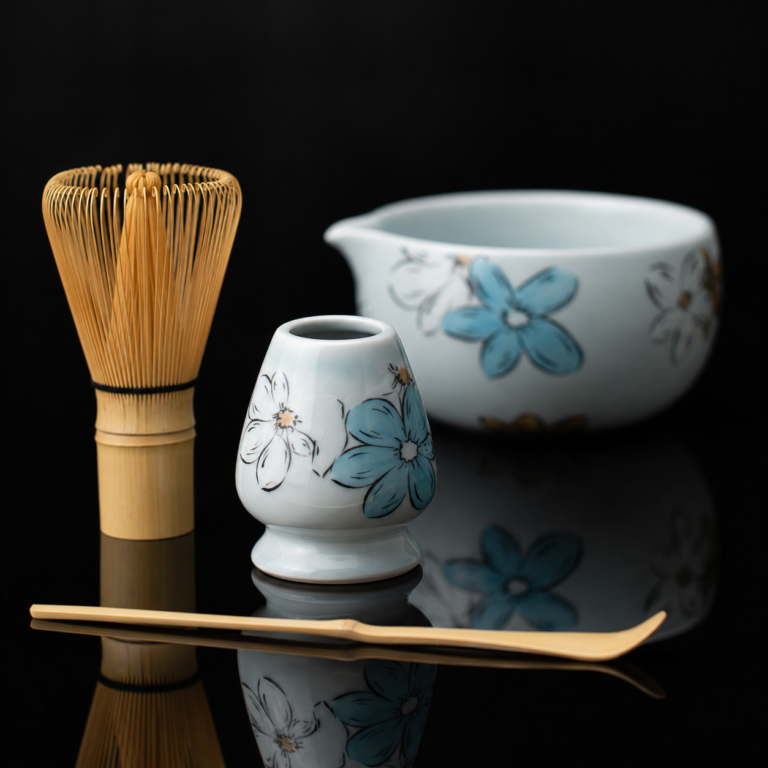
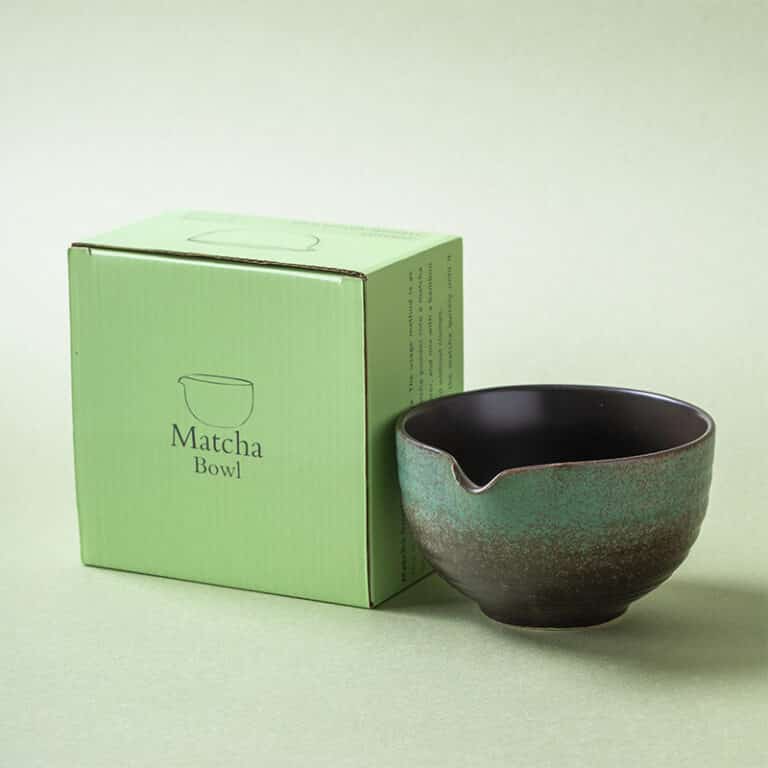
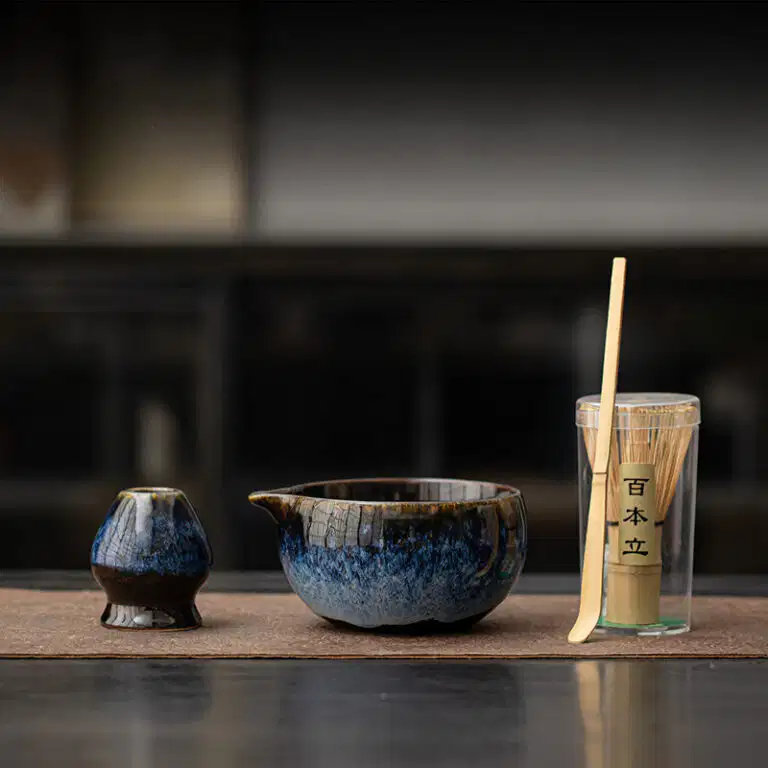
Chawan (matcha bowl): Wide-mouthed stoneware in the Stone granite-grey glaze, proportioned for confident whisking with depth suited to both usucha (thin matcha) and koicha (thick matcha). The smooth interior is a clean mid-grey, providing a neutral ground against which the vivid green of ceremonial-grade matcha reads with particular clarity and freshness. A small pouring spout is cut into the rim. The kodai (foot ring) is hand-finished, carrying the natural slight irregularity of a piece shaped by hand: in the wabi-sabi aesthetic, and within the shino tradition specifically, the foot of a chawan is considered one of its most expressive features.
Chasen tate (whisk holder): A ceramic chasen holder in the matching Stone glaze, compact and weighted, with the same even granite-grey surface as the bowl. The raised interior dome supports the tines of the chasen from beneath as they dry after each preparation, holding them in their correct curved position and significantly extending the working life of the whisk. Using a chasen holder consistently after every bowl is the single most effective practice for anyone who wants their chasen to last.
Chasen (bamboo whisk): A 100-tine hand-split bamboo chasen (百本立, hyakuhon-date), made from shiro-take (white bamboo) in the craft tradition of Takayama, Nara Prefecture, where the making of chasen has been practised continuously for over 500 years. At 100 tines, this is the grade recommended for everyday preparation by both the Urasenke and Omotesenke schools of Japanese tea: fine enough to produce a smooth, even awa (foam) efficiently and robust enough for daily use. Arrives in a clear protective storage cylinder.
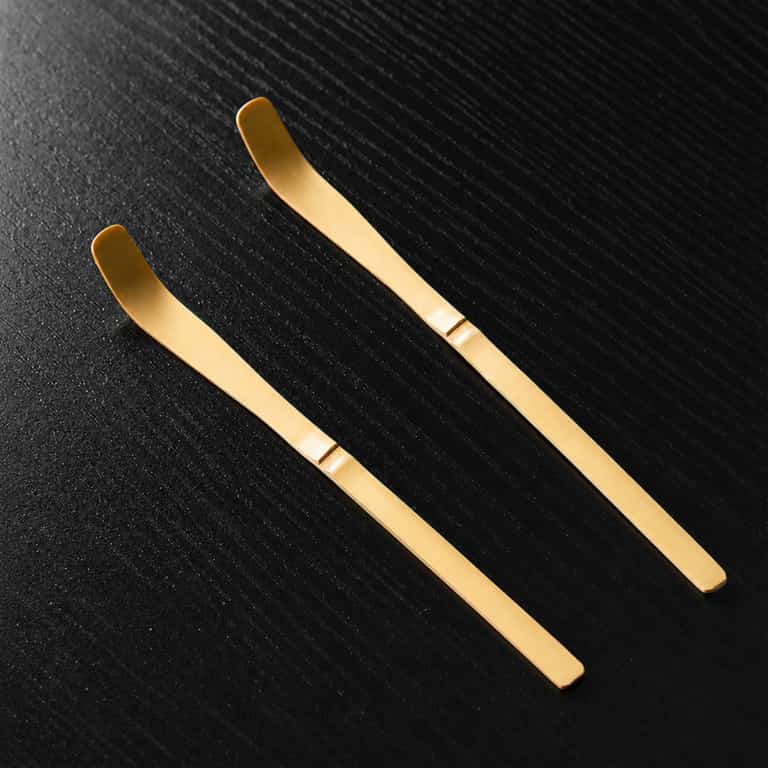
Chashaku (bamboo scoop): A natural bamboo matcha scoop with a long, gently angled tip (the sui) for precise, clean portioning directly from a natsume or tea caddy. One level scoop measures approximately 1g of matcha, the standard measure for a bowl of usucha.
Using the set:
Warm the chawan with a small pour of hot water, swirl, and discard. Soak the chasen tines in warm water for 30 seconds before first use to condition the bamboo. Sift 1 to 2 chashaku scoops of ceremonial-grade matcha into the warmed bowl. Add 70 to 80ml of water at 75 to 80 degrees Celsius and whisk in a brisk W or M motion until a smooth, even layer of awa forms across the surface. Drink directly from the bowl, turning it gently in both hands before the first sip. After each use, rinse the chasen under warm water and rest it on the chasen tate to dry. Wipe the chashaku clean with a dry cloth.
Pairing and styling:
The Stone glaze is the most versatile in the collection. The cool grey works equally well against natural wood tea trays (obon), dark slate surfaces, linen and cotton textiles, and bamboo matting. It pairs naturally with any other piece in the range and suits any aesthetic context: Japandi, minimal Scandinavian, traditional Japanese, or simply uncluttered and considered. For anyone building a matcha setup gradually, this is the most adaptable starting point.(Gifting
This set arrives complete and ready to give, in our gift packaging. The Stone colourway suits those who value craft over colour and objects that improve with familiarity. It is a thoughtful and lasting gift for anyone with a daily matcha practice or an interest in Japanese ceramic tradition.
Care:
All ceramic pieces: hand wash only, not dishwasher or microwave safe. The matte grey glaze will develop a quiet patina with use. Bamboo pieces: wipe clean with a dry cloth after each use, do not soak or machine wash.