Iron has coloured ceramics for as long as ceramics have existed. In the hands of potters in the old kiln towns of Bizen, Tokoname, and Shigaraki, iron-rich clay bodies and iron-bearing glazes produced the deep, earthy reds and blacks that became defining qualities of Japanese ceramic craft. In China, the same material gave rise to temmoku, the iron-glazed tea bowls of the Song Dynasty that so captivated visiting Japanese monks that they carried examples home, seeding an entire aesthetic tradition. This rust red chawan draws on that lineage: not as reproduction, but as a contemporary piece that understands where it comes from.
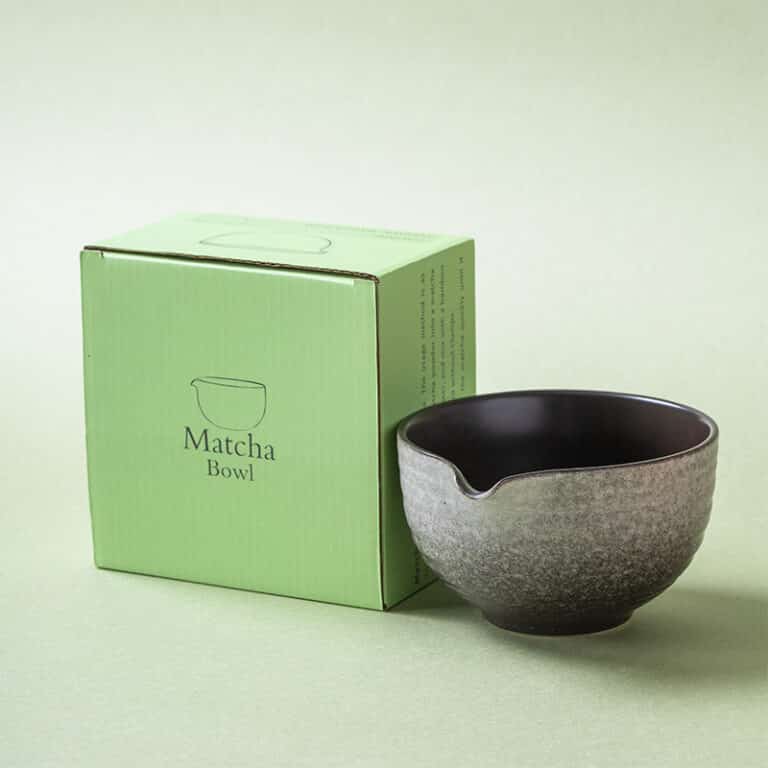
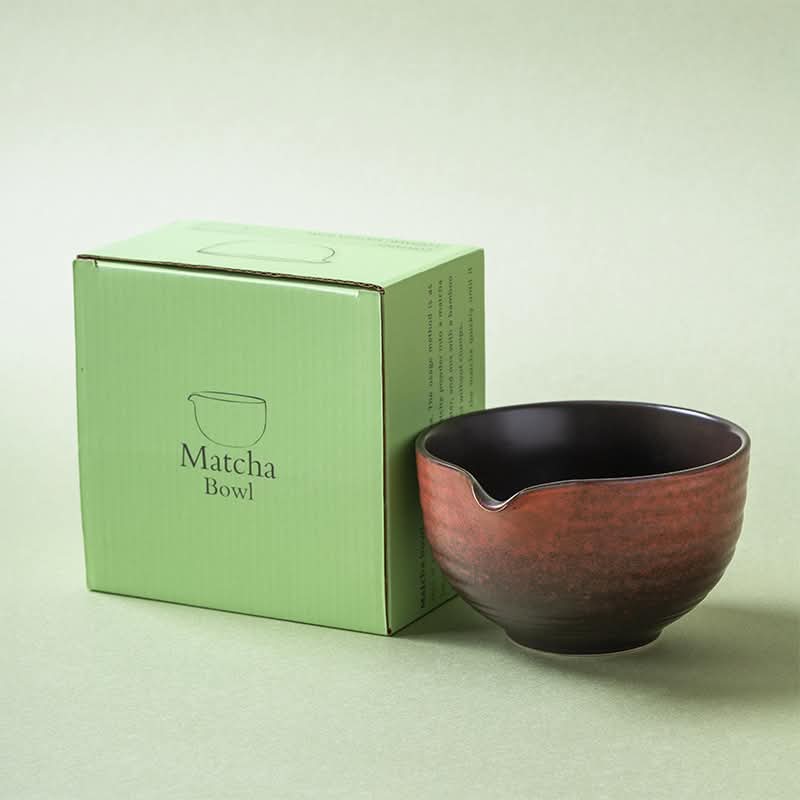
The glaze moves from a warm, mottled rust red at the shoulder and rim, the kaki, or persimmon colour, that high-iron glazes produce when oxidised in the kiln, down through burnt umber to a deep matte black at the foot. The transition is not a gradient but a natural consequence of how iron behaves under heat: pooling, migrating, and setting differently across the form. No two bowls are identical. The interior is dark and smooth, providing a strong contrast to the vivid green of a freshly whisked bowl of matcha.
Form and function:
The bowl is wide-mouthed and deep, the proportions suited to both the brisk whisking of usucha (thin matcha) and the slower, more deliberate preparation of koicha (thick matcha). The rim carries a small pouring spout: a practical detail that allows the last of the tea to be decanted cleanly or a bowl to be shared. The kodai (foot ring) is hand-finished, with the slight irregularity that marks a piece shaped by hand rather than machine, in the Japanese ceramic tradition, the foot of a chawan is considered by serious collectors to be as expressive as the glaze itself.
The colour and its context:
The rust red of this chawan has particular resonance on the tea table. Historically, iron-glazed wares in red and black tones were among the most prized for use in chado (the way of tea), their warmth and earthiness understood to complement the coolness and grassiness of matcha in a way that cooler, paler glazes do not. The Urasenke and Omotesenke schools of tea, the two principal lineages of Japanese chado, both maintain traditions around the selection and appreciation of chawan, and the warm iron colours have always featured prominently.
Against this bowl, the green of ceremonial-grade matcha, whether the deep, almost opaque green of koicha or the lighter, frothy green of usucha, reads with particular intensity. The contrast is not accidental.
Using your chawan:
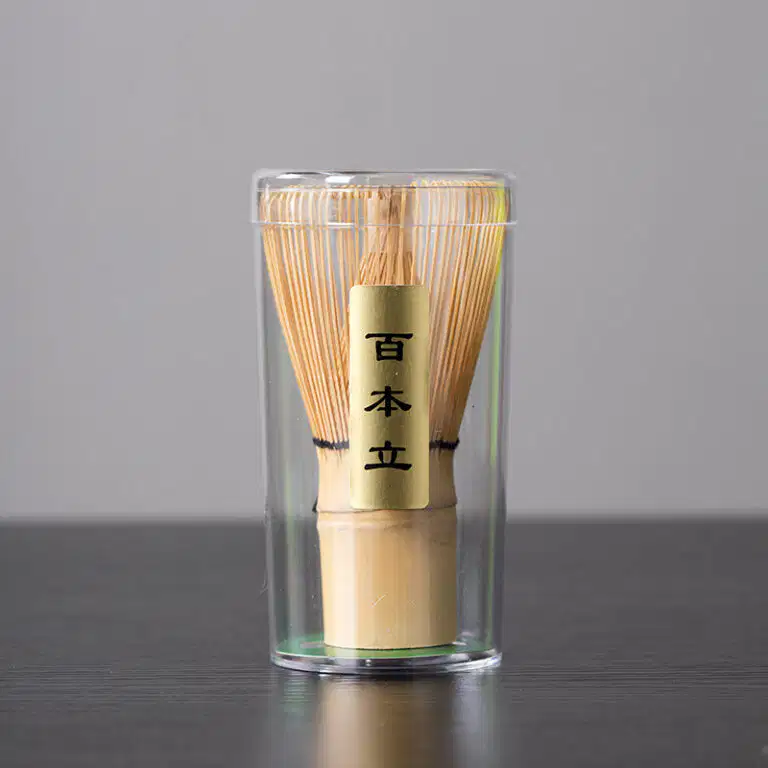
Warm the bowl before use with a small amount of hot water, then discard it — this brings the stoneware to temperature and helps the matcha stay warm longer. Sift 1–2 chashaku scoops (approximately 1.5–2g) of ceremonial-grade matcha into the warmed bowl. Add 70–80ml of water at around 75–80°C. Whisk in a brisk W or M motion with your chasen until a smooth, even foam forms on the surface. Drink directly from the bowl, turning it gently in both hands before the first sip.
Pairing and gifting:
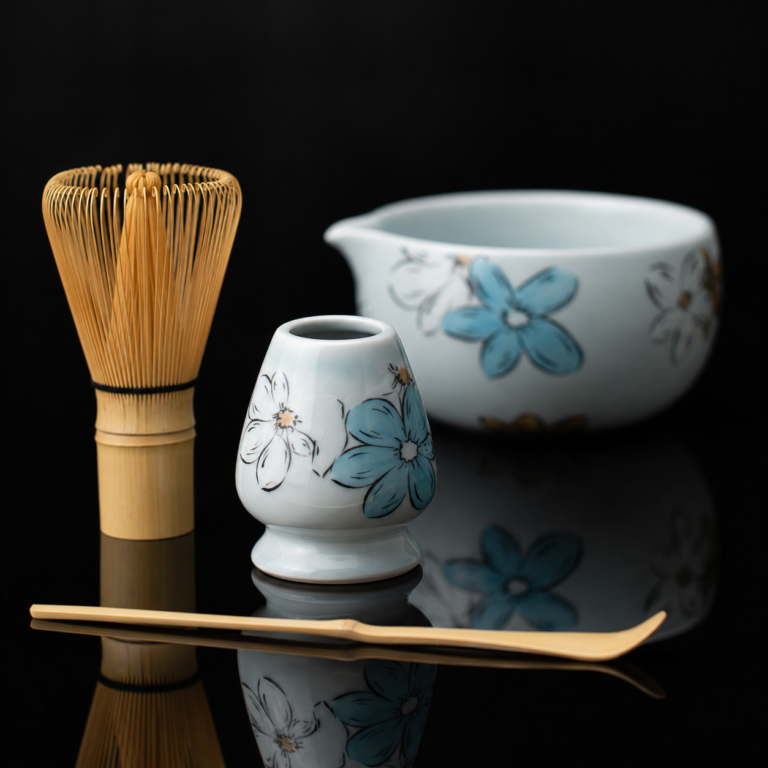
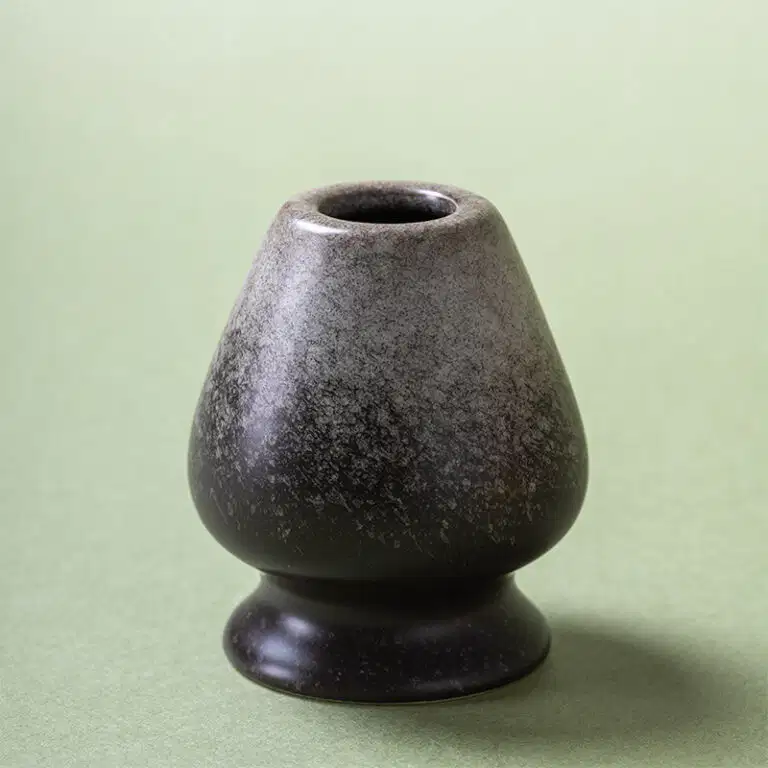
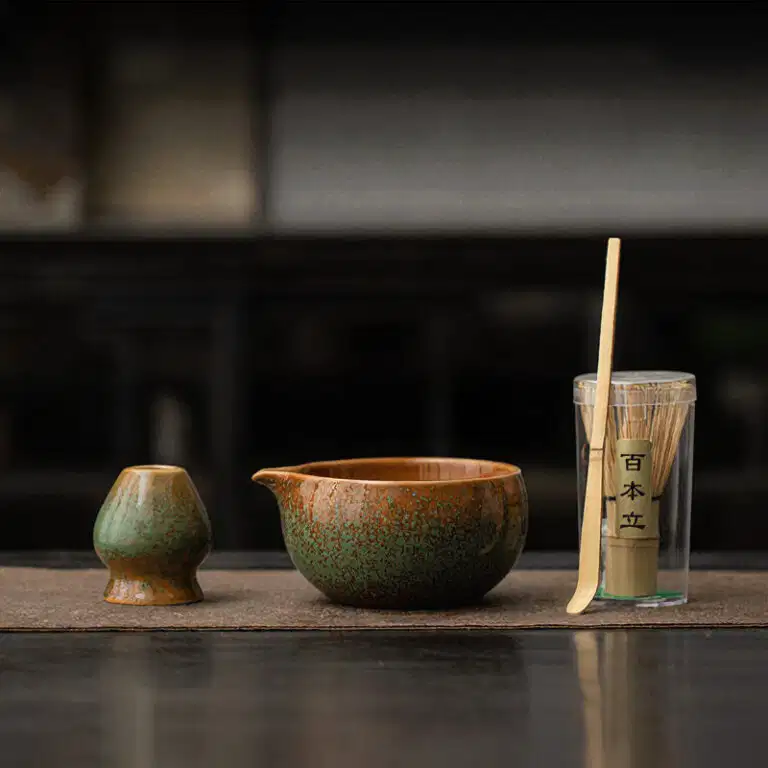
This chawan is designed as part of a matched set with our Rust Red Chasen Holder — the same glaze family, the same iron-fired palette. Together they make a considered and visually cohesive gift for anyone with a matcha practice. Both arrive in our matcha green gift boxes.
Care:
Hand wash only. Not dishwasher or microwave safe. The iron-rich glaze develops a subtle patina with use, which is a natural quality of this glaze type rather than a sign of wear. The bowl will season with time.